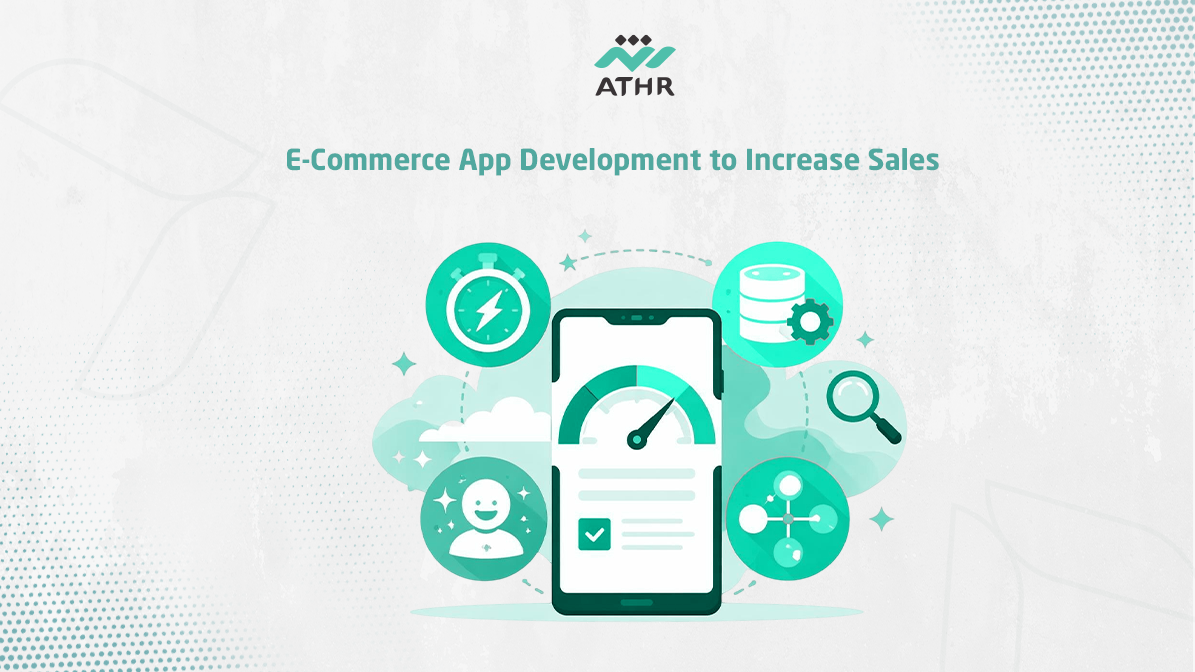
You may lose potential sales when customers struggle to find products or complete their payments. That’s why e-commerce app development helps you deliver a seamless, fast, and well-organized shopping experience that increases the chances of completed purchases and enhances customer satisfaction.
Get ready for more orders with an e-commerce app developed by Athr!
How Does Developing a Dedicated App for Your Store Create More Sales Opportunities?
Developing an e-commerce app helps simplify the shopping experience and encourages customers to complete their purchases. It also allows you to communicate with them directly and offer personalized deals based on their interests, increasing sales opportunities and encouraging them to return to your store.
1. Making It Easier for Customers to Find Products
When customers can easily find what they are looking for, they are more likely to make a purchase. That is why designing an e-commerce app helps you display products in well-organized categories, with search and filtering options based on price or type, allowing customers to find the right products in less time.
2. Increasing Repeat Purchases
Increasing e-commerce store sales is not just about attracting new customers; it also involves encouraging existing customers to shop again. You can achieve this through promotional notifications, exclusive discounts, and loyalty programs that give customers more reasons to return to your store.
For example, if you own a perfume store, you can send customers a notification when a fragrance they previously purchased is back in stock or offer discounts on similar fragrances that match their preferences, encouraging repeat purchases.
3. Improving Order Completion Rates
Customers may abandon their purchases if the checkout process is too long or payment options are limited. Therefore, e-commerce app development with a simple interface and clear steps helps streamline the purchasing process and reduce the likelihood of shopping cart abandonment.
To encourage customers to complete their orders, make sure to provide:
Simplified checkout steps: Allow customers to complete their purchases quickly.
Secure and diverse payment methods: Meet customer preferences in Saudi Arabia and the Gulf region.
Transparent shipping costs: Ensure customers know the total amount before making a payment.
Saved delivery information: Make future purchases easier without requiring customers to re-enter their details.
The easier and clearer the shopping experience, the greater the chances of completing orders and reducing abandoned carts. This helps increase your e-commerce store’s sales while improving the overall customer experience.
For more details: Discover how mobile apps contribute to business growth.
E-Commerce App Design That Makes Shopping Easier for Customers
The easier and faster the shopping experience, the more likely customers are to stay in your store and complete their purchases. That is why professional e-commerce app design helps you display your products in an organized way and simplify the purchasing process, providing customers with a convenient shopping experience that encourages them to return.
Organizing Products and Categories Clearly
Organizing products into clearly defined categories makes it easier for customers to find what they are looking for without browsing multiple pages. This is one of the most important aspects of successful e-commerce app development, as you can categorize products by type, brand, or price, making the shopping experience more organized and increasing purchasing opportunities.
For example, if you own a clothing store, you can divide your products into men’s, women’s, and children’s categories, with additional filters for sizes and colors, allowing customers to find the right products easily.
Making Product Search and Comparison Easier
Customers may hesitate to make a purchase when they struggle to choose the right product. Therefore, providing easy-to-use search and comparison tools helps them make confident purchasing decisions. By developing an e-commerce app with advanced search features, you can help customers find products and compare available options without leaving the app.
You can improve the search and comparison experience through:
Quick Search: Allow customers to find products by name or brand.
Search Filters: Display products based on price, category, or customer ratings.
Product Comparison: Highlight differences in prices and specifications to help customers make informed choices.
Customer Reviews: Help users learn from the experiences of previous buyers.
These features reduce the time customers need to find the right products, making the shopping journey easier and supporting increased e-commerce store sales.
Designing a Mobile-Friendly Shopping Experience
Customers need an app that is easy to use on their smartphones, with clear buttons, properly displayed images, and simple checkout steps. Therefore, successful e-commerce app design focuses on making navigation between products, the shopping cart, and the checkout page smooth and straightforward.
E-commerce app development also involves improving loading speed, simplifying the process of adding products to the cart, and providing payment methods that suit customers in Saudi Arabia and the Gulf region. This way, you can offer customers a convenient shopping experience and reduce the likelihood of them leaving before completing their orders.
What Does Your E-Commerce App Need to Achieve Better Results?
Developing an e-commerce app with an attractive design alone is not enough to increase sales. It must also provide a fast and seamless shopping experience that encourages customers to complete their orders. The success of an e-commerce app depends on several essential factors, including ease of use, diverse payment and shipping options, and fast performance. These elements help improve customer satisfaction and increase sales opportunities.
A Simple and User-Friendly Interface
Designing an app with a simple interface makes it easier for customers to find products without complications. Therefore, make sure to organize product categories, use clear buttons, and display product images and prices in a well-structured layout that adapts to different mobile screen sizes.
For example, when customers can select a product, add it to their cart, and proceed to checkout in just a few steps, the shopping experience becomes easier, increasing the likelihood of completing their orders.
Payment and Shipping Options That Meet Customer Needs
Customers may abandon their purchases if they cannot find suitable payment or shipping methods. Therefore, e-commerce app development should include secure and flexible options that meet the needs of customers in Saudi Arabia and the Gulf region.
Some of the most important options you can add include:
Multiple Payment Methods: Such as Mada, Apple Pay, and bank cards, depending on the payment gateway used.
Flexible Shipping Options: Such as home delivery or express shipping when available.
Order Tracking: Allowing customers to check their order status and estimated delivery date.
Transparent Pricing: Clearly displaying shipping fees and the final amount before payment.
These options give customers greater confidence while shopping and reduce the obstacles that may prevent them from completing their purchases, helping you increase your e-commerce store’s sales.
Fast Browsing and Checkout
Customers may leave an app if products take too long to load or if they experience difficulties during checkout. Therefore, fast performance is one of the most important factors in successful e-commerce app development, as it allows customers to browse categories and complete their purchases without delays.
App performance can be improved by compressing product images without noticeably affecting their quality, optimizing page loading times, and reducing the number of steps required to complete an order. It is also recommended to test the app’s performance on different devices to ensure a stable and smooth experience for all users.
Ways to Increase E-Commerce Store Sales Without Relying on Discounts
You don’t always need to offer discounts to attract customers and generate more sales. There are several ways to encourage purchases and increase order values without reducing your profits. By developing a professional e-commerce app, you can provide personalized product recommendations, encourage repeat purchases, and build long-term relationships with customers, supporting your store’s sales growth.
Recommending Products Related to Customer Purchases
Displaying products that match customers’ interests helps increase their order value. By developing an e-commerce app with a product recommendation feature, you can suggest complementary products based on what customers browse or add to their carts, encouraging them to purchase multiple items in a single order.
For example, if you own an electronics store and a customer purchases a new smartphone, you can recommend a protective case or compatible headphones. This way, you help customers find everything they need in one place while increasing opportunities to sell multiple products in the same order without lowering prices.
Encouraging Customers to Return for Repeat Purchases
Increasing e-commerce store sales involves encouraging existing customers to make repeat purchases. Your app can support this by sending notifications about new products, reminding customers of items they have shown interest in, and providing recommendations based on their previous purchases.
You can also offer an easy reordering feature, especially if you sell products that customers need regularly, such as coffee or personal care products. This makes returning to your store faster and increases opportunities for repeat sales.
Leveraging Loyalty and Rewards Programs
Loyalty programs help you reward customers and encourage continued shopping without relying on direct discounts. By designing an e-commerce app with a rewards system, you can offer customers exclusive benefits in return for their purchases and engagement with your store.
Some of the most effective loyalty program ideas you can implement include:
– Purchase Points: Reward customers with points for every order, which they can redeem for rewards.
– Loyal Customer Rewards: Offer gifts or exclusive benefits after customers complete a certain number of orders.
– Free Shipping: Reward repeat customers with free delivery under specific conditions.
– Early Access to Products: Allow loyal customers to access new products before they become available to everyone.
These features help you build stronger relationships with your customers and encourage repeat purchases, supporting your store’s sales growth while maintaining the value of your products.
Contact Athr’s experts to design an app that makes shopping easier for your customers!
How to Prepare Your E-Commerce App to Handle More Orders?
As the number of customers and orders increases, you need an app that operates quickly and efficiently without issues. Therefore, developing a fully integrated e-commerce app helps you organize orders, update inventory, and protect customer data, allowing you to manage sales easily during peak shopping seasons and major promotional campaigns.
Integrating Your App with Inventory and Order Management Systems
Connecting your app to an inventory management system allows product quantities to update automatically after each purchase, reducing the risk of selling out-of-stock items. Developing a fully integrated app also enables you to track orders from purchase confirmation to customer delivery without manually updating information.
For example, if you use the Salla or Zid platform, you can connect your app to your online store through available integrations to synchronize products, prices, inventory, and orders. This makes it easier to monitor and manage your business operations, even as sales increase.
Optimizing Performance During Peak Shopping Seasons
During major shopping seasons such as White Friday, Ramadan, and Saudi National Day, your store may receive a large number of customers simultaneously. Therefore, e-commerce app development should focus on improving app speed and ensuring stability during periods of increased demand.
To maintain app performance during high-traffic periods, make sure to provide:
Scalable Servers: Handle increasing numbers of visitors and orders.
Optimized Databases: Speed up product loading and order processing.
Load Testing: Ensure the app can handle a large number of users simultaneously.
Performance Monitoring: Detect and resolve issues before they affect customers.
These measures help reduce the likelihood of your app slowing down or experiencing downtime during important shopping seasons, preserving sales opportunities and providing customers with a stable shopping experience.
Protecting Customer Data and Payment Transactions
When customers purchase from your store, they share personal information and delivery details, so they need to feel secure. That is why e-commerce app design must prioritize protecting this data and preventing unauthorized access.
You can enhance app security by encrypting connections, implementing secure login methods, regularly updating systems, and using trusted payment gateways. You should also comply with the requirements of Saudi Arabia’s Personal Data Protection Law when collecting and using customer information.
The more secure and stable your app is, the greater customers’ confidence in purchasing from your store. This helps you retain customers and supports long-term sales growth.
Is It Better to Build a Standalone App or Connect It to Your Existing Store?
Choosing the right approach to e-commerce app development depends on your store’s size, needs, and budget. If you already have an online store, connecting an app to it may be easier and more cost-effective. However, if you need custom features and greater control over your business operations, a standalone app may be the better option.
The Difference Between a Standalone App and a Store-Integrated App
When designing an e-commerce app, you can choose between a standalone app with its own management system or an app connected to your existing online store. These options differ in terms of cost, flexibility, and management.
– Standalone App: Has its own system for managing products, customers, and orders, giving you greater flexibility to add features and integrations. It is suitable for businesses that require customized functionality, but it generally involves higher development and maintenance costs and takes longer to build.
– Store-Integrated App: Connects to your existing e-commerce platform, allowing you to manage products, prices, inventory, and orders through a single system, depending on the available integration capabilities. It is a practical option if you want to add a mobile sales channel without building a new management system.
Integrating Your App with Salla, Zid, and Shopify
If your online store runs on Salla, Zid, or Shopify, you can develop an app and connect it to the platform to make use of your existing store data. This helps you manage sales across your website and mobile app without entering the same information multiple times.
Some of the key benefits of integration include:
Product and Price Synchronization: Keep product information updated across your store and app.
Inventory Management: Track available stock quantities and avoid inconsistencies in product data.
Unified Order Management: Monitor website and app orders through a connected system.
Customer Data Synchronization: Update customer information that is permitted to be shared between systems.
For example, if you own a store on Salla, you can connect it to a mobile app so that product and price updates also appear in the app, depending on the available integration capabilities. This saves management time and makes it easier to monitor your store.
Choosing the Right Solution for Your Business Size
There is no single solution that suits every online store. Therefore, you should identify your business needs before starting e-commerce app development. Your decision depends on the number of products, order volume, desired features, and available budget.
– Small and Medium-Sized Stores: If you use Salla or Zid and want to make mobile shopping easier, an app connected to your existing store may be the most suitable option.
– Large Stores and Specialized Businesses: If you need advanced subscription systems, multiple warehouse management, or custom functionality, a standalone app may offer greater flexibility.
Your store needs more than just a platform to display products; it needs a shopping experience that encourages customers to make purchases and return again. This is where e-commerce app development becomes essential, combining ease of use with fast performance. Get started with Athr today and turn your store into a professional mobile app!