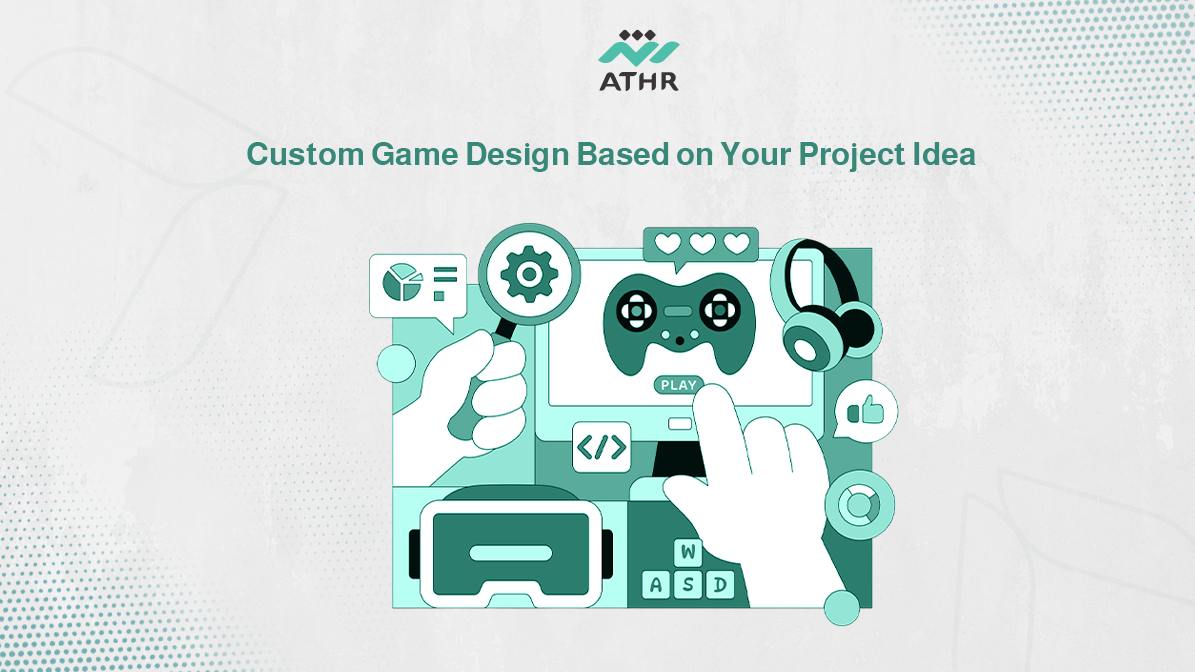
To turn your idea into a playable game, you need to choose the right design, program the features, and test the player experience. Athr provides custom electronic games design services tailored to your project’s requirements, while assessing the development stages and costs to help you begin implementation with clear steps.
Contact us and share your game details.
How Can You Turn Your Project Idea into a Feasible Electronic Game?
Turning an idea into an electronic game requires defining what you want to offer players, how the game will work, and which features it needs. An appealing idea alone is not enough; it must also be feasible within a suitable budget and a clear timeline.
To achieve this, you need three essential steps to help organize your idea before starting the electronic game design process.
Defining the Game’s Objectives and Target Audience
Start by defining the purpose of your game: What do you want to achieve with it? Are you aiming to generate revenue through in-game purchases, provide educational content, or create an interactive experience to promote your brand? Your answers will help determine the type of game and the features it requires.
Next, identify your target audience, their interests, and the devices they use. A puzzle game designed for children needs a simple design and easy controls, while a racing game aimed at young people requires different challenges and graphics suited to its competitive nature.
Having a clear understanding of your objectives and audience helps you select features that add real value to the player experience and avoid spending on unnecessary additions.
Evaluating the Idea and Identifying Development Requirements
Before starting electronic game design, you need to evaluate your idea from a technical perspective and identify the resources required to implement it. Some features may seem simple but require more time or additional technologies during development.
Start by defining the game type, target platforms, and the number of characters and levels. Then, identify the technical requirements, such as multiplayer functionality, server connectivity, and saving player progress.
Creating an Initial Concept for Gameplay and Core Features
After defining your game’s objectives and requirements, it’s time to visualize the player experience. What happens when players launch the game? How does the first challenge begin? What will motivate players to complete the levels? Answering these questions helps you build a clear experience before moving into full-scale programming.
You can start with preliminary screen sketches and define character movements, scoring mechanisms, reward systems, and transitions between levels. This stage does not require a final design but rather a concept that illustrates how the game will function.
What Elements Should the Initial Game Concept Include?
Gameplay: Define the tasks and challenges players will undertake to achieve their objectives.
Control Mechanics: Explain how players will move characters and interact with game elements.
Levels: Organize challenges so that difficulty increases gradually as players progress.
Reward System: Define the points and rewards that motivate players to continue.
Game Interfaces: Visualize the menus, settings, and how players will access different levels and features.
This step gives you a clearer vision when requesting custom electronic games design services, allowing you to start with an initial version focused on core features and then introduce new functionalities based on testing results and player feedback.
To learn more, read about the role of game development companies in developing projects.
How Do You Choose the Right Game Design and Gameplay for Your Project?
Designing an electronic game that suits your idea starts with choosing the game type, how players will interact with it, and the devices it will run on. These decisions shape the gameplay experience and affect the programming requirements, development time, and budget needed to implement your project.
Choosing a Game Type That Matches Your Idea
Not every popular game genre is suitable for your idea or target audience. Therefore, start by defining the experience you want to offer and what you expect players to do within the game. Then, choose the genre that helps you bring your idea to life in a clear and enjoyable way.
You can choose from different types of electronic games, including:
Adventure Games: Focus on exploration, completing missions, and interacting with different characters and environments.
Racing Games: Appeal to players who enjoy cars, speed, and competitive challenges.
Puzzle Games: Focus on thinking, problem-solving, and progressing through levels of increasing difficulty.
Educational Games: Help players acquire knowledge and skills through interactive activities and challenges.
Defining Gameplay Mechanics and Player Challenges
After choosing the game type, consider the player experience from the very first moment. What is the first task players will face? How will they understand the gameplay mechanics? What will encourage them to keep playing? Attractive graphics alone will not maintain their interest if the challenges are repetitive or the game’s objectives are unclear.
When developing custom electronic games, make sure to introduce challenges that evolve as players progress and give them opportunities to improve their skills. In a racing game, for example, you can start with an easy track that helps players learn the controls, then move on to more difficult tracks that require more precise driving and choosing the right vehicle.
You can also introduce rewards and new vehicles or unlock additional levels to encourage players to progress. However, it is important to test these elements with real players to ensure that the difficulty level is appropriate and that the challenges do not become a reason for losing interest.
Choosing the Devices and Platforms Your Game Will Run On
Identify the devices through which you want your game to reach its audience. Your choice of platform affects the control mechanics, screen design, graphics quality, and performance requirements.
The main platforms you can develop your game for include:
Android and iOS Smartphones: Suitable for games that rely on touch controls, allowing players to access them easily from their phones.
Computers: Suitable for games that require multiple control options or greater graphics and processing capabilities.
Web Browsers: Allow users to play the game directly through a browser without installing a separate application.
If you are targeting smartphone users in Saudi Arabia, make sure your game runs efficiently on devices with different specifications and screen sizes. However, if you plan to launch it on both smartphones and computers, you will need to account for differences in controls, performance, and compatibility testing.
Discuss your game design details with the Athr team.
Custom Electronic Game Design with an Identity That Reflects Your Project
Custom electronic games design allows you to create a game with distinctive characters, graphics, and colors instead of relying on ready-made elements that may not suit your idea. You can also customize environments and interaction mechanics to reflect your project’s identity and match the interests of your target audience.
When designing your own electronic game, make sure the visual elements complement the gameplay. Consistency between characters, environments, and interfaces helps you build a distinctive game world that players can easily recognize and remember.
Creating Characters and Environments That Match Your Game Idea
Characters and environments designed specifically for your game give it a unique identity that expresses its concept. To achieve the right look, you first need to choose a visual style, whether realistic or cartoon-style, two-dimensional or three-dimensional, based on the nature of the game and your target audience.
To achieve a cohesive design, focus on three essential elements:
Character Design: Choosing appearances and details that suit the game’s story and target age group.
Environment Design: Creating locations connected to the game’s events that allow players to explore and interact.
Visual Consistency: Unifying graphics, colors, and lighting styles to reflect your project’s identity.
Before approving the final designs, make sure to review initial character and environment concepts. This step will help you evaluate the overall appearance and make adjustments early, rather than discovering the need for changes after production has begun.
Designing User-Friendly Interfaces and an Interactive Gameplay Experience
Even if your game features attractive graphics and an innovative concept, players may lose interest if they struggle to navigate menus or understand the controls. Therefore, make sure to design clear interfaces that help players start playing and access features easily.
During electronic game design and development, you should consider button placement, smooth navigation between screens, clear instructions, and the game’s responsiveness to player commands. Every element displayed on the screen should help players interact without distracting them.
Customizing Levels, Challenges, and Rewards to Increase Player Engagement
Custom electronic game development is not limited to graphics and characters; it also includes designing levels and challenges that provide players with a continually evolving experience. The more players feel a sense of progress and discover new elements, the more likely they are to continue playing.
You can improve the player experience through several elements, including:
Progressive Levels: Starting with simple levels that help players understand the game, then introducing challenges that require more advanced skills.
Varied Missions: Providing players with different objectives and activities instead of repeating the same challenge at every level.
Motivating Rewards: Allowing players to unlock new characters, vehicles, or tools after achieving specific milestones.
For more details on starting your project, read our article on starting an electronic gaming business.
How Are Your Game Designs Transformed into Interactive Features?
After completing the design of characters, environments, and interfaces, the next stage involves transforming these elements into features that respond to player actions. In electronic game design, this step relies on programming movement and controls and connecting sounds and challenges to in-game events, turning the game into a playable experience rather than a collection of static designs.
Programming Characters, Movement, and Control Systems
Character programming begins by defining the movements characters can perform and how they respond to player commands and surrounding elements. This includes walking, jumping, driving, and interacting with objects, depending on the type of game you want to develop.
For example, if your idea is an adventure game, the character must respond to movement and jump controls and stop when colliding with obstacles. In a racing game, however, you need to program acceleration, braking, and steering to match the intended driving mechanics.
Implementing movements through programming alone is not enough. You must also test responsiveness and ease of control on the target devices. This helps identify issues that could affect the player experience before moving on to more advanced development stages.
Integrating Sounds and Effects with In-Game Events
Sounds and visual effects help clarify what is happening within the game and make player interactions with characters and elements easier to understand. Therefore, effects should be linked to appropriate events rather than added simply to enhance the game’s appearance.
When designing electronic games, several types of effects can be integrated, including:
Movement Sounds: Such as character footsteps and vehicle sounds.
Interaction Effects: Triggered when collecting items or using tools.
Alert Sounds: Indicate approaching danger or when time is running out.
Visual Effects: Such as dust, lighting, and collision effects.
For example, in a racing game, the engine sound can be linked to the car’s speed, while dust effects can appear when driving on sandy roads. These effects must be adjusted and their performance tested to ensure they do not affect the game’s running speed or the visibility of important elements.
Connecting Gameplay Elements to Create a Cohesive Experience
During custom electronic game development, you need to connect movement systems, levels, points, and rewards so they function according to clear rules that players can understand.
For example, if your game is based on completing missions, finishing a mission should update the player’s points, grant a reward, or unlock a new level, depending on the progression system you previously defined.
How Can You Ensure Your Game’s Features Work Together?
Core systems can be tested through several practical scenarios:
Mission Completion: Ensuring that achievements are recorded when mission requirements are met.
Point Calculation: Verifying that rewards are added and deducted correctly.
Level Progression: Testing whether levels unlock when the required objectives are achieved.
Progress Saving: Ensuring that player data is restored when returning to the game.
Testing these features together helps identify errors that may not appear when each element is tested separately. It also allows you to make the necessary adjustments before preparing the final version for launch.
If you are looking for an electronic game design company to help transform your designs into interactive features, Athr provides custom programming and development services tailored to your project’s requirements.
Give your idea the opportunity to become a custom electronic game. Contact Athr and start your project.
How Much Does It Cost to Design a Custom Electronic Game for Your Project?
The cost of designing an electronic game depends on your project’s size, graphics quality, number of levels, and the features you want to include. For example, a simple puzzle game requires a smaller budget than a 3D game featuring multiple characters, an open world, and advanced gameplay systems.
To determine the right budget for your idea, it is important to identify the game’s requirements and essential features. This way, you can obtain a price quote that reflects the actual scope of work rather than a general estimate that may not suit your project.
How Game Size and Design Details Affect the Cost
The more characters, environments, and details your game requires, the more time and effort the design and production process will take. Therefore, the cost of custom electronic game design is influenced by the amount of visual content and the level of detail you want to provide players.
For example, the cost of a puzzle game based on 2D graphics differs from that of an adventure game featuring 3D characters and expansive environments that players can explore and interact with.
The main design elements that affect project costs include:
Characters: The number of characters, their level of detail, and the movements required for each.
Environments: The size of the game world, the variety of locations, and the elements players can interact with.
Graphics: The design type, whether 2D or 3D, and the complexity of its details.
Animation: The number of character animations, animated scenes, and visual effects required.
If you have a limited budget, you can start with fewer characters and environments while focusing on gameplay quality. After launching the first version, you can add new content and improve the graphics according to your project’s needs.
The Role of Technical Features and Levels in Determining the Budget
The cost of designing an electronic game goes beyond creating graphics. It also includes programming the systems and features that control the player experience. As technical features become more numerous and complex, the time and effort required for development and testing increase.
Similarly, the scope of work is not determined solely by the number of levels but also by the nature of the challenges within each level. A single level featuring new gameplay mechanics may require more development time than several levels that use the same systems with changes to tracks or difficulty levels.
It is important to identify the required technical features from the beginning, such as user accounts, progress saving, or in-app purchases. Adding these features after major parts of the game have been developed may require modifications to existing systems.
How to Define Your Project Scope Within Your Budget
If you are planning to turn an idea into an electronic game with a specific budget, you do not need to implement every feature from the start. You can focus on the functions that provide a complete gameplay experience on a smaller scale, then introduce additional features after testing your audience’s engagement.
How Can You Prepare Your Game Requirements to Get an Accurate Price Quote?
Before contacting a game development company, prepare a clear project description that includes the following information:
Game Concept: Explain the type of game, its purpose, and the audience you want to target.
Target Platforms: Specify the devices you want your game to run on, such as Android, iOS, or computers.
Core Features: List the essential functions for the first release and identify additional features that can be developed later.
Available Budget: Define an initial budget range so the company can suggest suitable solutions.
Quotation Details: Request a breakdown of development stages, deliverables, costs, testing, and post-launch support services.
Dividing your project into stages helps you allocate your budget to features that players actually need, without spending large amounts on additions whose importance has not yet been tested. It also gives you the opportunity to compare game development companies based on implementation details and the quality of deliverables rather than price alone.
Your game idea is the starting point, and proper execution is what brings it to life. With Athr, you can design a custom electronic game that suits your project and meets your audience’s needs.
Share your idea with us and let us help you turn it into a real game.