Game development companies offer different prices and services, making it difficult to choose the right one. In this guide, you’ll learn how to choose a game dev company that meets your project’s requirements and budget.
Consult the Athr team to choose the right development solutions for your game.
What Are the Most Important Criteria for Choosing a Game Dev Company for Your Project?
When choosing a game dev company, don’t limit your comparison to prices or visual designs. Focus on the company’s experience, the quality of its previous games, and the expertise of the team responsible for your project to ensure it can deliver a game that performs efficiently and aligns with your goals.
Practical Experience in Developing Similar Games
A company’s experience with similar projects helps you assess its ability to bring your idea to life and handle its technical requirements. For example, if you’re planning to develop an online multiplayer game, it’s best to look for a team experienced in server management, player connectivity, and data synchronization.
Before hiring a custom game development company, evaluate three key aspects:
Previous Game Projects: Has the company developed games similar to your idea and its features?
Technologies Used: Does the company have experience with the tools and game engines suitable for your project?
Technical Challenges: How has the company handled programming and performance issues in previous projects?
The company doesn’t necessarily need to have developed the exact same game before, but it should demonstrate clear experience with the core requirements of your project.
Quality of Previous Projects and Player Experience Reviews
A game may look appealing in screenshots, but the actual gameplay experience reveals the quality of its design and development. Therefore, when evaluating game development companies, don’t rely solely on their portfolios. Try some of their published games whenever possible.
Pay attention to responsiveness, ease of control, interface clarity, and game stability during use. You can also review player ratings and feedback on app stores to identify recurring issues and assess how effectively the company addresses them.
To evaluate technical performance, you can ask the company whether it uses tools such as Google Android Vitals, which help monitor Android app crashes and application not responding (ANR) issues after launch.
Team Specializations and Technical Expertise
Game development requires multiple skills working together to transform your idea into a playable game. Team size varies depending on the nature of the project. A simple mobile game may require only a few specialists, while 3D or multiplayer games demand additional expertise.
Key roles your project may require include:
Game Designer: Defines gameplay rules, challenges, and player progression.
Game Developer: Implements game features and interactive systems.
UI/UX Designer: Ensures navigation and controls are clear and user-friendly.
Graphics and Animation Designer: Creates characters, environments, and visual effects.
QA Tester: Identifies bugs and verifies game stability.
Project Manager: Oversees tasks, development stages, and delivery deadlines.
Learn about the key factors to consider when looking for a company to design your game.
How Can You Verify a Game Development Company’s Expertise Before Hiring?
Before hiring a game development company, make sure it can bring your idea to life rather than simply offering attractive designs or promises of delivery. You can evaluate its expertise by testing its previous games, discussing the team’s skills, and understanding its performance testing and quality assurance methods.
Reviewing and Testing Previous Game Projects
A company’s portfolio gives you an idea of its experience, but testing its games yourself helps you assess the quality of execution more accurately. Request links to published games or demo versions, preferably ones similar to the type of game you want to develop.
During testing, pay attention to three key elements:
Ease of Gameplay: Are the instructions clear and the controls simple?
Smooth Performance: Does the game respond quickly without noticeable freezes or delays?
Player Reviews: Are there recurring complaints about crashes or usability issues?
Also, ask about the company’s role in the showcased projects and whether it handled the entire design and development process or only specific parts. This will help you determine how relevant its experience is to your project’s needs.
Evaluating Design and Programming Skills and Game Engine Selection
A game design company needs a team that combines creativity with technical expertise. Design shapes the player experience, while programming ensures that systems and features function correctly.
To evaluate the team, discuss how it would implement certain features in your game. For example, if you want a multiplayer game, ask how player progress will be saved, how competitions will be managed, and how internet disconnections will be handled.
Also, verify the team’s experience with game engines such as Unity and Unreal Engine, as well as its ability to select the right engine based on graphics, performance, and target devices. A qualified team explains the reasons behind its technical decisions rather than recommending tools without clarifying their suitability for your project.
Verifying Performance Quality and Compatibility with Target Devices
A game may lose its appeal if players experience slow performance or frequent crashes, regardless of how impressive its graphics are. Therefore, make sure the game development company tests the game on devices suitable for your target audience throughout the development process.
Some of the tests you can ask about include:
Performance Testing: Measuring response times and frame rates during gameplay.
Compatibility Testing: Ensuring the game runs properly on target devices and operating systems.
Connectivity Testing: Checking multiplayer stability when the internet connection is weak or interrupted.
Functional Testing: Verifying that levels, rewards, and player progress saving work correctly.
Google Android Vitals can be used to monitor crashes and application not responding (ANR) issues in Android games published on Google Play.
Before signing the contract, request clarification on how test results are documented and the acceptance criteria for the final version, so you can evaluate the game’s quality based on clear, agreed-upon requirements.
Every game has different requirements. Let the Athr team help you identify your project’s needs.
What Game Development Services Do You Need?
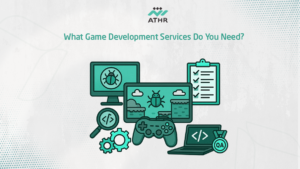
Game development services vary depending on your game’s type, features, and target devices. A simple game may only require level design and programming, while multiplayer games need additional systems to manage players and servers.
Therefore, make sure the development company provides the services your project needs, from idea analysis to testing, publishing, and technical support, to avoid any unplanned additional costs.
Analyzing the Game Idea and Defining Project Requirements
The game design and development process begins by transforming your idea into a clear plan that defines the target audience, gameplay mechanics, and required features.
For example, an educational game for children needs content and challenges appropriate for their age groups, while competitive games focus on fast interactions and reward systems.
During this stage, the development team helps you define:
Game Type and Audience: Identifying the target audience and the type of experience that suits them.
Target Platforms: Choosing Android, iOS, PC, or web platforms.
Gameplay Mechanics: Defining missions, levels, rewards, and winning conditions.
Initial Release: Selecting the essential features needed to launch the game.
Budget and Timeline: Estimating the required resources and development schedule.
It’s best to document these details in a clear scope of work with a custom game development company so you know exactly what will be delivered and can track the project’s progress.
Designing Characters and Levels and Programming Gameplay Mechanics
Once the requirements are defined, the process of transforming your idea into an interactive game begins. This includes designing characters, environments, and levels, followed by programming movement, controls, scoring, rewards, and player progress saving.
Attractive graphics alone are not enough; they must support the gameplay experience. For example, an adventure game needs progressively challenging levels and intuitive controls that help players explore the environment and advance through the game.
This stage may also include developing user interfaces, integrating user accounts, and implementing multiplayer systems, depending on your project’s requirements.
Game Testing, Publishing Preparation, and Technical Support
A game needs testing to ensure its stability and ease of use across target devices.
This stage includes several services:
Functional Testing: Ensuring levels, rewards, and progress saving work correctly.
Performance and Compatibility Testing: Checking game speed and resource consumption across different devices.
Publishing Preparation: Preparing game files and the information required by app stores.
Technical Support: Fixing bugs and providing agreed-upon updates after launch.
Google Play Console and its Pre-launch Reports can help identify certain performance, stability, and compatibility issues before publishing Android games.
Before signing a contract, make sure the company’s proposal clearly outlines publishing responsibilities, the duration of technical support, and included updates, so you know which services you’ll receive after the game is delivered.
Learn about 3D game production requirements to determine what you need from a development company.
How to Compare Game Development Companies to Choose the Best Fit?
When comparing game development companies, send each company a clear description of your idea, including the game type, target platforms, and required features. This will help you compare proposals based on consistent requirements rather than relying on prices alone.
Focus on the services you actually need and how clearly each company outlines its development plan and costs, so you can choose a company capable of developing your game according to your goals and budget.
Comparing the Scope of Work and Services Offered
You may receive two proposals for developing the same game, but one includes design, programming, and testing, while the other covers programming only. Therefore, carefully review the details of each proposal before hiring a game development company.
Make sure the following aspects are clearly addressed:
Design and Development: Does the proposal include characters, interfaces, levels, and all required features?
Testing and Publishing: Will the company test the game and prepare it for app stores?
Intellectual Property Rights: Will you receive the source code and design files according to the contract terms?
Technical Support: How long will post-launch support last, and which issues will it cover?
Also, ask about excluded services and potential additional costs, especially if your game requires servers or third-party services.
Evaluating the Project Timeline and Delivery Milestones
A company’s promise to launch your game within a short period doesn’t necessarily mean it’s the most efficient choice. The game design and development process requires time for planning, implementation, and testing, and the timeline varies depending on the project’s size and features.
Therefore, request a timeline outlining the development stages, delivery dates, and review milestones. For example, if you’re developing a game with ten levels, it’s better to test one level first to evaluate control quality and difficulty before completing the remaining levels.
Make sure sufficient time is allocated for revisions and testing so you can track project progress and identify issues before final delivery.
Balancing Development Quality and Cost
The cost of game development varies depending on graphics quality, the number of levels, features, and target platforms. Therefore, the lowest-priced proposal may ultimately become more expensive if it excludes essential services such as testing and publishing.
To compare proposals, use the following criteria:
| Comparison Criteria | What Should You Check? |
|---|---|
| Cost | Does the price include everything, or are there additional fees? |
| Development Quality | Are there previous games you can test? |
| Features | Does the proposal include all required features? |
| Revisions | How many revisions are included in the price? |
| Technical Support | How long does support last, and what services are provided after launch? |
If your budget is limited, you can start by developing a Minimum Viable Product (MVP) that includes the essential features needed to test your idea, then add new features based on player engagement.
Share your game details with Athr and get a proposal tailored to your requirements.
How Much Does Game Development Cost?
The cost of game development varies depending on the game’s type, size, graphics quality, and required features.
To get an accurate estimate, clearly explain your idea and requirements to the development company, including the target devices and essential features, so you can compare prices accurately.
How Game Type and Project Size Affect the Budget
The type and complexity of a game affect its development cost and the time required for implementation. A 2D game with a limited number of levels is usually less expensive than a 3D game featuring animated characters and diverse environments.
However, the number of levels isn’t the only factor. A five-level game may cost more than a twenty-level game if it requires advanced artificial intelligence or a multiplayer system.
Additionally, mobile game development for Android and iOS may require extra testing to ensure compatibility across different devices.
Cost of Graphics, Levels, and Advanced Features
The game design budget includes creating graphics, characters, and levels, as well as implementing technical features. The more detailed and customized these elements are, the more time and effort development requires.
Key factors affecting the cost include:
3D Graphics: Require character and environment modeling, animation, and lighting.
Number of Levels and Characters: More content means additional design, programming, and testing work.
Multiplayer Gameplay: Requires servers, communication systems, and player data synchronization.
Artificial Intelligence: Requires developing character behaviors and interactions within the game.
In-App Purchases and Rewards: Include programming purchase transactions, virtual currencies, and integrating the necessary services.
Audio and Visual Effects: Costs vary depending on the level of detail and customization.
Ask the development company to distinguish between essential and additional features, with a clear cost breakdown for each, so you can invest your budget in elements that genuinely support your game idea.
Hosting, Maintenance, and Future Update Costs
Game expenses don’t always end when development is complete. You may need an ongoing budget for hosting and maintenance, especially if your game relies on multiplayer functionality or user data storage.
The main costs you should plan for include:
Hosting and Servers: To run online games and manage player data.
Publishing Fees: Apple Developer Program membership typically costs $99 per year, while Google Play Console registration costs approximately $25 as a one-time fee. Fees and taxes may vary by country.
Technical Maintenance: To fix bugs and improve performance after launch.
Future Updates: To add new levels or enhance game features.
To create a realistic budget, divide your project expenses into initial development costs, ongoing operating expenses, and a budget for future updates, so you’re prepared for the stages following your game’s launch.
Plan your game budget clearly and discover the costs you should take into account.
What Are the Key Contract Terms to Review Before Hiring a Game Development Company?
Before hiring a game development company, make sure the contract clearly outlines ownership rights, the scope of work, delivery milestones, payment terms, and technical support. These details help you understand what you’ll receive and avoid disputes or unexpected costs during game development and after launch.
Game Ownership and Source Code Rights
Paying for game development doesn’t necessarily mean you own all its rights and files. Therefore, the contract should clearly define the rights to use the source code, designs, and assets created specifically for your project.
Before signing, review the following points:
Source Code: Will you receive the source files and the rights to modify and further develop them?
Designs and Characters: Who owns the rights to graphics, interfaces, and original assets?
Third-Party Licenses: Does the game include ready-made tools or assets subject to licensing terms?
Publishing Accounts: Will the developer accounts be under your control?
Future Development: Can you hire another team to update the game later?
It’s also important to specify when the agreed-upon files and rights will be transferred. If you’re developing a game in Saudi Arabia, make sure the transfer of economic rights is documented in writing, with its scope clearly defined in accordance with applicable laws and regulations, and have the contract reviewed by a legal specialist.
Documenting the Scope of Work, Revision Terms, and Delivery Conditions
You may agree with a game dev company to create a game with specific levels and features, then decide to add new functionality during development. This is where a clearly defined scope of work becomes essential, specifying what the contract includes and how changes will be handled.
It’s preferable to attach a Game Design Document (GDD) outlining gameplay mechanics, levels, features, and target platforms.
You should also agree on delivering playable builds at specific milestones. For example, you can review a prototype of the controls and gameplay before approving the design of all levels.
Payment Terms, Warranties, and Post-Launch Support
It’s best to link payments for your game development project to clearly defined development and delivery milestones rather than relying on payment dates unrelated to completed work.
You can agree on an initial payment when the project begins, another after approving the designs and demo versions, and a final payment after receiving the game according to the agreed-upon conditions.
Before signing, check the following terms:
Payment Schedule: The amount of each payment and its due date.
Acceptance Criteria: The standards for accepting the game and the time allowed for reviewing it.
Bug Warranty: The warranty period and the programming issues it covers.
Technical Support: Communication channels and response times after launch.
Additional Updates: How new levels and features will be priced.
Delays or Contract Termination: Both parties’ rights and the agreed-upon procedures.
Pay attention to the difference between fixing a bug in an agreed-upon feature and adding new functionality. The former may be covered by the warranty, while the latter may require an additional fee.
You’re just one step away from starting your project. Talk to the Athr team.
What Mistakes Should You Avoid When Choosing a Game Design Company?
Choosing a game dev company without evaluating its experience and services may lead to higher costs or receiving a game that doesn’t meet your expectations. Some of the most common mistakes include focusing solely on price, overlooking the company’s previous games, and starting the project without clear requirements.
Choosing Based on Price Without Evaluating Quality
The lowest-priced proposal may seem suitable for your budget, but it sometimes excludes essential services such as testing, character design, or technical support. Therefore, don’t compare game development companies based solely on the final price.
Before choosing a proposal, check the following:
Included Services: Does the price cover design, programming, testing, and publishing?
Development Quality: Do the company’s experience and previous projects match your game’s requirements?
Additional Costs: Are there services you’ll need to pay for later?
For example, a proposal that includes programming, testing, and publishing may be more suitable than a cheaper proposal that only covers programming. What matters most is understanding what you’ll receive for your budget.
Overlooking the Company’s Previous Game Testing
Screenshots and promotional videos aren’t enough to evaluate a company’s capabilities. A game may look visually appealing but suffer from slow response times or difficult controls during gameplay.
Therefore, ask to test previous games similar to your idea, and pay attention to ease of gameplay, smooth movement, and performance stability.
If the games are published on Google Play or the App Store, review recent player ratings and comments, especially those related to crashes and technical issues.
Signing a Contract Without a Clear Development Plan and Requirements
Starting a project without defining the game’s details may lead to different expectations between you and the development team. For example, requesting an adventure game doesn’t specify the number of levels, control mechanics, or required reward system.
To avoid this, define the following elements with the development company:
Game Concept and Audience: The game type and target audience.
Core Features: Required levels, challenges, and rewards.
Target Platforms: Android, iOS, PC, or web.
Delivery Milestones: What will you receive at each development stage?
Revisions: How will additions and changes be handled during development?
It’s best to document these requirements in a Game Design Document (GDD) so both parties have a clear reference.
The right company for your project isn’t necessarily the cheapest one, but the one that understands your idea and provides a clear plan to bring it to life. Therefore, compare game development companies carefully and review their previous work before making your decision.
Your idea deserves to come to life. Share it with the Athr team and take the first step.