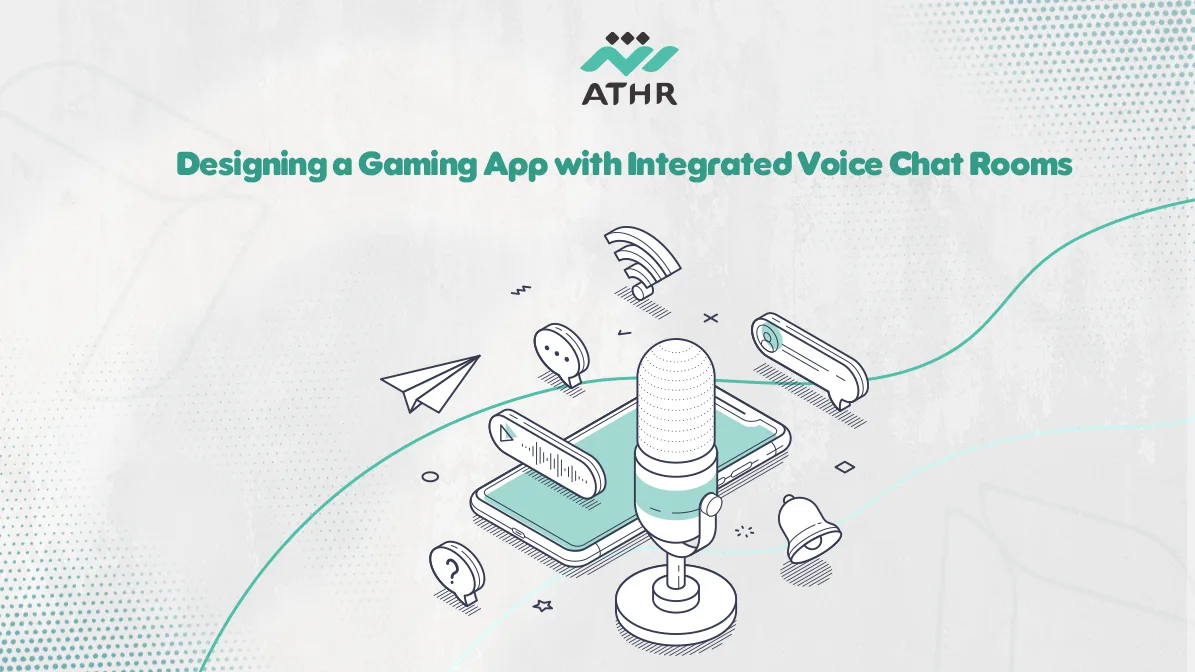
A gaming app with voice chat rooms lets players talk to each other by voice while they play, without leaving the game or switching to another app. At Athr, we design and build these apps for Android and iOS for clients in Saudi Arabia and the Gulf, from the game concept and interface to real-time voice integration, servers, moderation tools, and launch.
Whether you have an idea for a multiplayer game or an existing app you want to add voice to, this guide explains how voice rooms work, which technologies are used, how player data is protected, and what drives the cost.
Let your players talk and interact inside your game – let us program it for you with professional expertise.
Why Demand for Voice-Enabled Gaming Apps Is Growing?
In recent years, the design of gaming apps with integrated voice chat rooms has become a major trend in the gaming industry, especially following the huge growth in multiplayer and interactive games. Players are no longer satisfied with single-player gaming or communicating via text messages; they are seeking a more realistic experience by speaking directly with their friends inside the game.
The trend is especially strong in the Gulf, where social card games such as Baloot and Jackaroo are played in groups, and where talking and joking are part of the fun itself.
How Voice Rooms Work Inside a Game
Voice rooms within games are virtual spaces that allow players to talk to each other during gameplay via a microphone without having to leave the application.
They are built with ready-made Voice SDKs such as ZEGOCLOUD and Agora, which handle:
- High-quality, real-time audio transmission.
- Low latency. The reference standard for voice quality is ITU-T Recommendation G.114, which advises keeping one-way delay under 150 milliseconds.
- Support for large rooms, with the maximum number of concurrent speakers depending on the SDK and plan you choose.
This technology has become the basis for programming interactive games with live voice chat, especially for Multiplayer Games that rely on team cooperation or competition, such as Jackaroo, PUBG, and Valorant.
🎯When thinking about creating a modern game, don’t just focus on excellent graphics—make communication part of the experience!
What Our Voice Gaming App Service Includes
- Concept analysis: game type, number of speakers per room, team-only or open voice.
- UI/UX design: clear voice controls and speaking indicators that don’t get in the way of play.
- App development: Android and iOS, using Flutter or Unity depending on the game.
- Voice integration: rooms, teams, mute controls, and moderator permissions.
- Servers and player management: session sync, profiles, and settings.
- Safety and moderation tools: reporting, muting, and blocking.
- Testing, store submission, and post-launch support.
How to Design a Gaming App with Integrated Voice Chat Rooms
If you are wondering: How can I design a gaming app that includes integrated voice chat rooms?
The answer lies in the smart integration of the technical aspects with the interactive experience.
The purpose of this feature is not only to enable players to talk but to create a real interactive environment that encourages competition and cooperation.
When designing such an app, the programming team must consider:
- Connection quality and stability.
- Minimizing audio latency.
- A simple user interface that allows quick access to rooms.
- Protecting audio data and securing conversations.
💡Adding a voice chat feature to games can increase application usage time by up to +55%, meaning a more loyal audience and greater profitability.
Steps to Build a Voice-Enabled Gaming App
Developing a voice-enabled multiplayer gaming application requires a precise strategy that goes through several well-thought-out stages:
1. Define the Game Idea and Required Voice Experience:
Start by determining the game type (competition, adventure, cards…) and the number of players who will talk simultaneously.
2. Design the User Interface and Voice Experience:
An intuitive UI/UX design ensures easy communication within the game. Every button or voice icon must be clear and quick to respond.
3. Choose the Appropriate Development Platform:
Technologies like Flutter and Unity are ideal tools for designing integrated voice gaming applications, thanks to their wide support for different systems like Android and iOS.
4. Integrate the Voice Chat API:
This is the core of the project—where real-time Voice SDKs are integrated, such as:
- Zego Cloud – Distinguished by stable performance and high audio quality.
- Agora SDK – One of the most famous solutions for linking voice with video and group interaction.
- Firebase Realtime Database – For managing players and session synchronization.
5. Testing and Optimization Before Launch:
Audio is tested in different environments (Wi-Fi and 4G/5G networks) to ensure a complete experience without cutting out or interference.
Key Technologies for In-Game Voice Chat
To develop an interactive game app with live voice chat, developers rely on a set of tools to ensure a clear and stable voice experience:
| Technology | Used for |
|---|---|
| ZEGOCLOUD | Voice rooms and group calls |
| Agora | Real-time voice and video, channel control |
| Photon Voice | Voice inside Unity games |
| Firebase | Player data and settings |
| Opus Codec | Efficient, high-quality audio compression |
Keeping Voice Quality and Connection Stable
- Low CPU and RAM usage so voice doesn’t slow the game down.
- Opus compression to keep audio clear while reducing data.
- Adaptive bitrate to adjust quality automatically to connection speed.
- Separate voice channels per team to organise communication and reduce server load.
- AI noise suppression and automatic gain control, available in modern voice SDKs.
Developing a Voice-Enabled Multiplayer Gaming App

Developing a voice-enabled multiplayer gaming app is a qualitative leap in the world of interactive entertainment. Games no longer rely only on graphics and visual effects; voice has become the core element for effective communication between players.
However, designing a game that includes voice rooms is not just about adding a microphone or a chat feature; it is an integrated engineering process that requires a delicate balance between performance, experience, and security.
How to Make Multiplayer Gaming More Fun Using Voice Communication
If you want to design a successful voice-enabled gaming app , you must first understand how voice communication makes a difference in the multiplayer experience:
1. Creating a Social Environment within the Game:
Direct voice communication between players makes them feel like they are in the same room, adding a social sense that enhances fun and competition.
2. Fostering Teamwork and Coordination:
In team-based games like Jackaroo or Battle Royale, players need quick planning and interaction, and voice is a strategic tool for decisive competition.
3. Increasing Emotional Immersion in the Experience:
Voice not only transfers information but also emotions—like anger, joy, surprise—making the experience realistic and impactful.
4. Raising the In-Game Retention Rate:
GameAnalytics data indicates that games with direct voice communication retain players at a rate exceeding +45% compared to non-interactive games.
Strategies for Maintaining High Performance During Live Voice Streaming
When developing an interactive game app with live voice chat, the biggest challenge developers face is maintaining smooth performance during voice streaming. To achieve this, you must implement advanced technical strategies that ensure stability even with a large number of users.
1. Reducing Resource Consumption (CPU & RAM):
Voice programming must be light on the device so as not to affect game performance or cause lag during play.
2. Compressing Voice Data Without Affecting Quality:
This is done using advanced encoding algorithms like Opus Codec, which maintains audio clarity while reducing the size of transferred data.
3. Dynamic Control of Audio Quality (Adaptive Bitrate):
This technique allows for automatically adjusting audio quality based on internet speed, preventing voice disconnections on weak networks.
4. Separating Voice Channels for Different Teams:
Creating multiple channels within the same game helps organize communications and reduce the load on the Server.
Ideal Server Solutions for Voice-Enabled Gaming Apps
Choosing the right server is the foundation for the success of any gaming app that includes voice chat rooms. The server is not just a space for storing data; it is responsible for interaction speed and streaming quality.
The most important solutions used in the voice gaming market:
- Amazon GameLift:
Specifically designed for managing group servers for multiplayer games with stable performance and global hosting.
- Photon Server:
One of the most famous dedicated servers for Multiplayer games with excellent support for Real-Time Audio technologies.
- ZegoCloud Hosting:
An ideal choice for gaming apps that require high-quality, live voice chat with low latency.
When designing a voice-enabled gaming app targeted at the Saudi market, choose local or regional servers to reduce latency and improve user experience in the region.
Take your first step towards the world of smart gaming –Details in this guide.
Why Clients Choose Athr for Voice Gaming Apps
When you search for the best company for designing voice-enabled gaming apps in Saudi Arabia, you are not just looking for a code developer, but for a strategic partner who understands player behavior and seamlessly integrates technology with the user experience. In the world of modern gaming, project success depends on three main pillars:
- Technical Innovation.
- Stability and Security.
- Quality of Voice Experience.
Here, the Athr company stands out as an ideal choice due to its extensive experience in programming interactive games with live voice chat and providing advanced voice solutions supported by AI and Cloud Integration technologies.
Criteria for Choosing a Professional Game Programming Company
Choosing the right game development company determines the success of your project from the start. So, before you begin implementing your idea, keep these essential criteria in mind 👇
1. Practical Experience in Designing Voice-Enabled Gaming Apps:
Check the company’s previous projects, especially those involving voice rooms or Multiplayer features. Experience in this type of development guarantees you strong performance and speed in execution.
2. Use of Modern Technologies in Voice and Real-Time Streaming:
Ensure the company relies on technologies like Zego Cloud or Agora SDK to guarantee real-time connection quality without delay.
3. Integration of Design and Performance:
Professional companies do not just focus on code; they prioritize User Experience (UX) and the ease of switching between chat and gameplay without any interruption.
4. Post-Launch Support:
App development is not the end of the journey; it is the beginning. Make sure the company provides maintenance services, continuous updates, and performance optimization based on user feedback.
Security, Privacy, and Moderation
Safety in a voice app is more than encryption — it also means protecting players from abuse and complying with local regulations. We build:
Protection methods used:
- Smart monitoring systems to detect suspicious activities or hacking attempts.
- Reporting, muting, and blocking tools: the App Store and Google Play both require apps with user-to-user communication to provide ways to report abuse and block users.
- Isolation of each voice room’s data to ensure information is not shared between users.
- Hosting on local Saudi servers to reduce risks and improve connection speed.
Talk to our experts now and get a development plan that fits your idea and budget.
Professional Tips for Creating a Successful Voice-Enabled Gaming App

The success of any gaming app that includes voice rooms depends not only on the technology used but on the small details that make the difference between an ordinary application and a world-class gaming experience. Based on Athr’s experience in developing voice-enabled multiplayer gaming apps, here are the most important professional tips to ensure the building of a successful application from start to launch:
- Start by Studying the Target Audience:
Know exactly who the players are, their voice preferences, and where they spend their time. Good design starts with understanding user behavior.
- Focus on Social Interaction:
Integrating voice chats is not only for communication but for building a community within the game, which increases loyalty and encourages group challenges.
- Ensure Sound Quality and Smoothness:
Nothing ruins the gaming experience like audio cutting out or lagging; therefore, use strong programming interfaces like ZegoCloud or Agora SDK.
- Integrate Audio Motivation Elements:
You can link rewards or challenge notifications to distinctive sounds that increase instant interaction within the game.
Designing a User-Friendly Voice Interface
The User Interface (UI) is the first thing a player touches, and it determines whether the experience is fun or confusing. When designing the interface for a voice-enabled gaming app, focus on:
- Simplicity of Voice Buttons: Control elements must be clear and easily accessible during gameplay.
- Adding Visual Indicators for Voice: Such as waves that appear when speaking or when a new player joins the voice room.
- Minimizing Steps Between Game and Chat: Do not force the user to exit the game to speak; instead, make voice an integral part of the experience itself.
- Enabling Night Mode and Quiet Play Mode: To maintain eye and ear comfort during long sessions.
Testing the Application Before Launch and Improving Connection Quality
Performance testing is a crucial step that cannot be ignored in designing a voice-enabled gaming app; it is the true guarantee of a bug-free experience. At the Athr company, a comprehensive testing methodology is adopted before launch to ensure performance in every possible environment.
The most important aspects that must be tested:
- Load Test: To determine the number of users who can communicate simultaneously without interruption.
- Audio Quality Test: The connection is tested in different network environments (Wi-Fi / 4G / 5G) to ensure stable voice in all conditions.
- Latency Analysis: Ensuring that audio is transmitted in less than 100 milliseconds to achieve an instant interactive experience.
- UX Review: Gathering feedback from initial players and improving the voice interface and channel customization before the commercial launch.