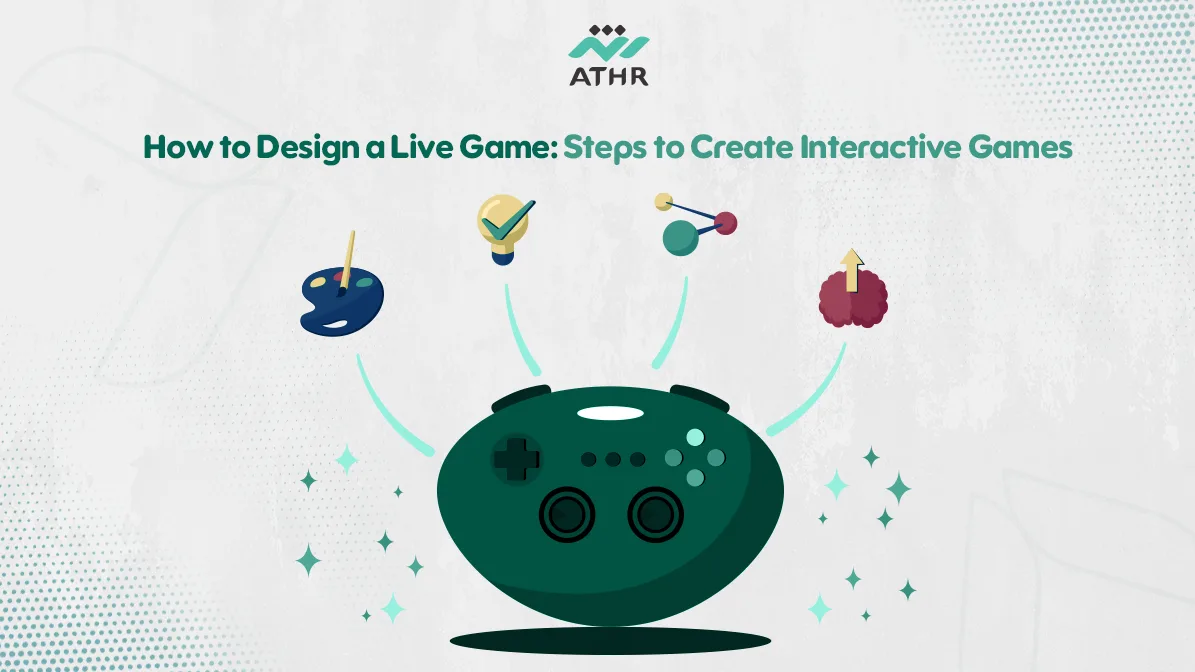
Designing a live game is an exciting process that blends creativity and technology to create an interactive experience that audiences enjoy. You will learn about the steps involved in designing interactive games from start to launch, with a focus on the techniques and methods that ensure an enjoyable game, and how to transform your idea into a live game that players interact with in real-time.
Talk to our experts now and start designing your innovative game!
What are the steps to design a live game?
Designing a live game involves several key steps to ensure an enjoyable experience that aligns with players’ preferences, starting from selecting the game idea all the way to the testing phase.
1) Define the game idea and interaction goals
The first step in designing any game is to define the main idea. You should ask yourself: “What do I want the player to feel while playing?” If you’re designing a live game, continuous interaction between players or with the game environment will be a core element.
🔹 Game Idea: Choose a simple yet innovative idea. Think about how players will interact with the game and with each other. How will the game mechanics provide an enjoyable experience?
🔹 Game Objective: Define the interaction goal. Is it a multiplayer game that requires cooperation among players? Or is it a competitive game where each player faces off against others in ongoing challenges?
2) Choose the game type and level design
Once you’ve defined your game’s idea, the next step is to choose the game type, as it will significantly affect how you design levels and player interactions.
There are various types you can design, such as:
🔹 Action and adventure games: These offer levels filled with challenges and puzzles that encourage players to interact.
🔹 Virtual reality (VR) games: These allow players to interact with a virtual environment in an immersive and engaging way.
🔹 Puzzle and strategy games: These require players to think and plan smartly to solve problems.
When designing levels, it’s important to provide progressively increasing challenges. Ensure that each level adds new value to the experience, keeping the player engaged and motivated to continue advancing.
Learn about the latest game design techniques in Saudi Arabia.
3) Choose the tools and technologies used in game development
To develop an interactive online game, it’s essential to choose the right tools and technologies. There are several modern software options that offer powerful capabilities like Unity and Unreal Engine, which help create interactive games with stunning sound effects and 3D graphics.
Unity: A popular game engine that allows you to easily develop games for mobile devices and computers.
Unreal Engine: Known for its high-quality graphics capabilities, it is particularly used in developing virtual reality games.
Programming languages: Learning programming languages like C# or C++ is essential to develop the codes your game needs and run smoothly.
Learn how to design interactive games with ATHR’s programming services.
Tips for Creating Online Live Games that Attract Players
If you aim to develop an interactive game for online users, it’s important to have effective strategies to attract players and maintain their continuous engagement. Here are some tips that can help:
Best Ways to Engage Players in Real-Time
Real-time interaction is a key element in designing live games. Here are some effective ways to ensure dynamic interaction with players:
Real-Time Synchronization Techniques: Use technologies like WebSockets to ensure real-time player interaction, providing them with a smooth and direct experience.
Smart Artificial Intelligence: AI can enhance player interaction by adding new challenges or advanced levels based on their behavior within the game, improving the experience.
Continuous Updates: Adding periodic updates to the game with new features or improvements helps keep players excited and makes the experience more thrilling.
Get direct tips from ATHR experts.
How to Ensure the Success of Live Online Games in the Market
It’s important that your live games are more than just entertainment; they are interactive environments full of details that need to provide an enjoyable and easy experience for players.
The Importance of SEO for Online Games
Just like any other website, optimizing SEO for online games requires thoughtful strategies to increase visibility in search engines and attract new players.
Best Practices to Follow:
✔️ Use Long-Tail Keywords: Such as “how to design a live game,” “best interactive game of 2026,” and other keywords that help improve your ranking on search engines.
✔️ Optimize Game Pages: Ensure that the game pages have clear titles, detailed game descriptions, and reviews that help increase engagement on the page.
✔️ Engage with Users: Interacting with user comments on various platforms like game reviews or discussions in forums can help improve the game’s ranking in search engines.
Marketing and Promotion Options for Online Games
Marketing is the key element to attract players to your online games. Besides SEO, you need to rely on effective marketing strategies to ensure the game’s success in the market.
✔️ Influencer Marketing: Collaborating with influencers in the gaming field can have a big impact on promoting your game. These influencers can spread the game across their social platforms such as YouTube and Twitch, helping you reach a broader audience.
✔️ Paid Advertising Campaigns: Allocating part of the budget for paid ads on platforms like Google and Facebook helps reach a more targeted and efficient audience.
✔️ Promotional Offers: Offering special deals such as discounts or free trials can be a strong incentive to attract new players and encourage them to join the game.
Looking for a company to design your electronic games? Read our article to learn how to choose the best for your project.
In conclusion, designing a live game is an enjoyable process that requires creative thinking and perseverance. By following the right steps and choosing the right technologies, you can create an interactive experience that combines fun with ongoing interaction. If you’re ready to start your next project in the gaming world, contact us at “ATHR” and let us help you turn your idea into a living, breathing game. We are here to support you every step of the way!