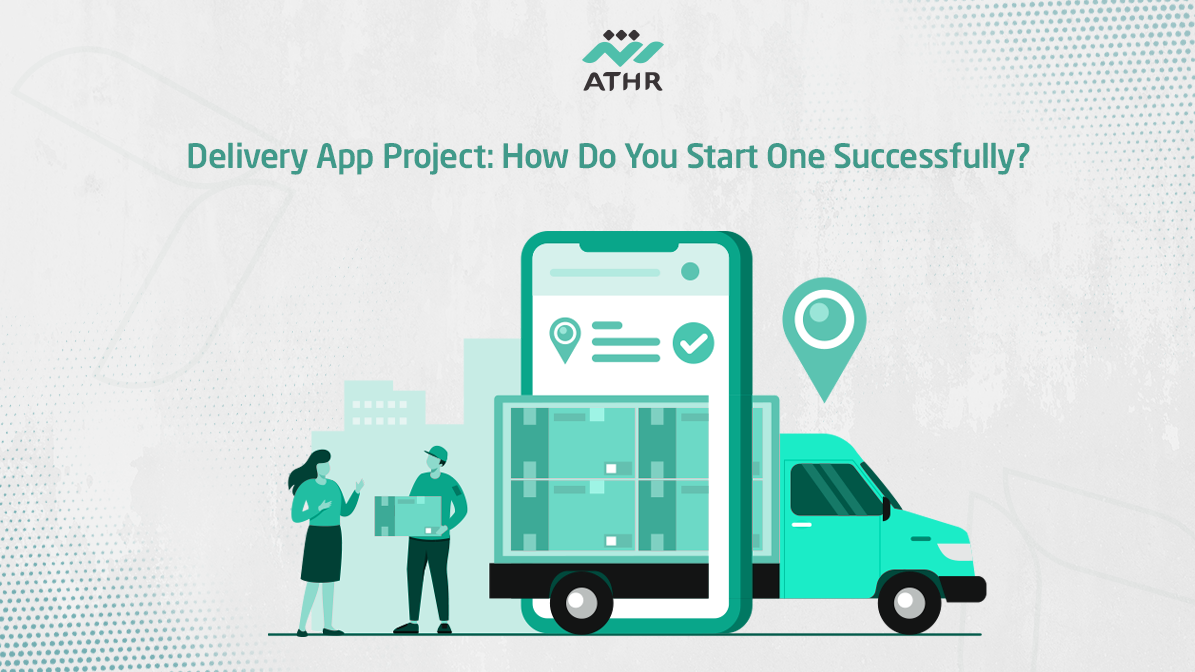
Speed, clarity, and ease of ordering are the most important factors customers look for when using any delivery app. Therefore, a delivery app project should be built around user needs rather than the number of features it contains. From location selection and price display to payment and driver tracking, every step influences whether the customer completes the order or leaves the app.
Is Your Delivery App Project Suitable for the Target Market?
The viability of a delivery app project depends on the presence of a clear market need, not only on the popularity of delivery apps. The service must provide a faster, easier, or more specialized solution than the options currently available. Market research helps you understand the level of demand, customer behavior, the areas that need the service, and the weaknesses of competing apps.
What Problem Will the App Solve for Users?
A successful delivery app project begins with a real problem faced by users, not only with technical features. The clearer and more frequent the problem is, the greater the chances that customers will use the app regularly.
Your app may solve one of the following problems:
- Difficulty obtaining a delivery service in a specific area.
- Long waiting times in existing apps.
- The absence of an app specializing in a particular type of product.
- The lack of real-time tracking or clear delivery costs.
- Difficulty communicating between customers and drivers.
- Poor social media management and communication with customers about services and offers.
For example, you could create a medicine delivery app project or an app for delivering documents or local products instead of competing directly with general delivery apps.
How Can You Verify That There Is Real Demand for the Service?
Before investing a large budget in a delivery app project, you should test the idea with a sample of the target audience and confirm their willingness to use the service.
You can verify demand by:
- Conducting short interviews with potential customers.
- Publishing a survey about problems with current delivery services.
- Reviewing user ratings of competing apps.
- Testing the service manually within a small geographical area.
- Creating a landing page and measuring the number of registration requests.
- Contacting stores to determine their willingness to join.
The more genuine feedback you receive, the more your decision to develop a delivery app project will be based on information rather than expectations.
What Market Gap Can Help Your App Outperform Competitors?
A market gap is the advantage that encourages customers to choose your app over existing apps. It does not necessarily have to be a completely new idea, but it must provide clear value to users.
Your competitive advantage may include:
- Faster order fulfillment.
- Coverage of areas not served by other apps.
- Specialization in a specific sector.
- Clearer delivery prices.
- Monthly subscriptions for repeat customers.
- Faster technical support.
- A simpler user experience.
- Launching advertising campaigns to reach customers and increase orders.
It is better for a delivery app project to focus initially on one clear competitive advantage instead of attempting to provide every service at once.
Read the complete guide to managing a delivery app efficiently.
Which Operating Model Fits a New Delivery App?
Choosing an operating model directly affects the cost of a delivery app project and its ability to grow. You must therefore determine who receives the orders, who fulfills them, how drivers are paid, and how operations are managed.
Athr helps you choose the appropriate operating model, whether by managing a private fleet, relying on independent drivers, or integrating with external delivery companies.
Should You Manage a Delivery Fleet or Rely on Independent Drivers?
Managing a private fleet gives you greater control over quality and delivery times, but it requires a higher operating budget. Independent drivers help you expand quickly, but they need a clear monitoring and evaluation system.
A private fleet is suitable when:
- You need a consistent level of service.
- You deliver sensitive or high-value products.
- You operate within a limited geographical area.
- You need to train drivers on specific procedures.
- You can afford salaries, vehicles, and maintenance costs.
Independent drivers are suitable when:
- You want to reduce fixed costs.
- You expect the number of orders to fluctuate throughout the day.
- You plan to expand into more than one city.
- You rely on payment per completed order.
- You need to increase the number of drivers quickly.
A hybrid model that combines a core fleet with independent drivers during peak periods can also be used.
What Is the Difference Between On-Demand and Scheduled Delivery?
On-demand delivery involves fulfilling an order as soon as it is created, while scheduled delivery allows the customer to choose a suitable day and time to receive the order.
On-demand delivery is suitable for:
- Restaurants and cafés.
- Pharmacies.
- Grocery stores and daily essentials.
- Emergency services.
- Urgent documents.
Scheduled delivery is suitable for:
- Furniture and large products.
- Corporate orders.
- Weekly subscriptions.
- Products that require preparation.
- Intercity delivery.
The selected model affects how orders are assigned, how arrival times are calculated, and how drivers are scheduled within the app.
How Do You Choose a Suitable Geographical Area for Launch?
Launching a delivery app project across large areas from the beginning may increase costs and make it difficult to maintain service quality. It is better to start in a specific area and expand after testing operations.
When selecting the initial service area, review:
- The density of potential customers.
- The number of stores or service providers.
- The distances between pickup and delivery points.
- Peak traffic times.
- Driver availability.
- The average cost per trip.
- The presence of strong competitors in the area.
Start within a small area, collect data, improve operations, and then gradually expand into new locations.
How Do You Build a Profitable Business Model for a Delivery App?
An app may generate a large number of orders without making a profit if the cost of fulfilling each order is higher than the revenue it generates. You therefore need to know who pays, how much they pay, and the actual cost of each delivery.
A clear business model helps you balance a suitable price for the customer, a fair commission for the driver, and a profit that supports the project’s continuity.
Which Revenue Sources Can You Rely On?
The revenue sources of a delivery app project can be diversified instead of relying only on delivery fees.
The main sources of revenue include:
- Delivery fees paid by the customer.
- A commission from the order value.
- Monthly subscriptions for stores.
- Customer subscriptions in exchange for free or discounted delivery.
- Priority fees for express delivery.
- Paid advertisements and promotions within the app.
- Service fees on orders.
- Customized delivery solutions for companies.
- System usage fees paid by store branches.
It is better not to add every revenue source from the beginning. Instead, choose a simple model that customers and merchants can easily understand. Athr contributes to identifying the model that best suits the nature and goals of your project.
How Do You Set a Suitable Commission for Merchants and Drivers?
The commission must be sufficient to cover operating costs while not being so high that it causes merchants or drivers to leave the platform.
Before setting the commission, calculate:
- The average order value.
- The expected delivery distance.
- The time required by the driver.
- Technical support and technology costs.
- Electronic payment fees.
- Customer acquisition costs.
- The percentage of canceled orders.
- Offers and discounts.
- Competitors’ prices in the market.
The commission can be set as a percentage of the order value, a fixed amount, or a tiered system that varies according to distance and service type.
When Does a Delivery App Project Begin Generating Profits?
A delivery app project begins approaching profitability when the revenue generated from orders becomes higher than the costs of operations, delivery, and marketing.
Monitor the following indicators:
- The cost of acquiring a new customer.
- The average number of orders per customer.
- The average profit per order.
- The order cancellation rate.
- The driver cost per trip.
- The customer return rate.
- The value of the discounts provided.
- Monthly operating costs.
Read the article and make delivery ordering easier and faster.
What Does the First Version of a Delivery App Include?
The first version, or MVP, is a release that includes the essential features required to test the service and process orders with a limited number of users. Its purpose is to test the project, not to implement every possible idea within the app.
Launching a clear initial version reduces risks and provides real data that helps you make development decisions.
Which Features Should Be Implemented Before Launch?
The essential features vary according to the type of delivery app project, but the first version generally requires three integrated systems: the customer app, the driver app, and the admin dashboard.
Customer App:
- Account creation and login.
- Location and address selection.
- Service or store selection.
- Order creation.
- Delivery cost display.
- Payment method selection.
- Order status tracking.
- Communication with the driver.
- Experience rating.
Driver App:
- Registration and document upload.
- Receiving orders.
- Accepting or rejecting an order.
- Navigating to the pickup location.
- Viewing customer details.
- Updating the order status.
- Viewing earnings and trips.
- Communicating with support.
Admin Dashboard:
- Managing customers and drivers.
- Monitoring orders.
- Defining coverage areas.
- Setting prices and commissions.
- Managing stores and services.
- Reviewing payments.
- Sending notifications.
- Generating reports.
Which Features Can Be Postponed to Later Stages?
Not every useful feature must be implemented before launch. Some features increase development costs without being necessary for testing the service.
The following can be postponed:
- Advanced loyalty programs.
- Internal digital wallets.
- User referral systems.
- Multiple subscription options.
- Artificial intelligence for demand forecasting.
- Multiple languages if the launch is local.
- A bidding system between drivers.
- Integration with a large number of systems.
- Advanced analytical reports.
- Complex group orders.
The features of a delivery app project should be prioritized according to user needs and the importance of each feature to service operations.
How Does the Initial Version Help Test the Project at a Lower Cost?
The initial version shows you how users interact with the app, whether drivers can fulfill orders easily, and whether the pricing model is suitable for the market.
Through it, you can test:
- The number of steps required to create an order.
- The percentage of completed orders.
- The most active areas.
- The average delivery time.
- The reasons for cancellation.
- The problems faced by drivers.
- Customer satisfaction with pricing.
- The features users actually request.
Instead of building a large system based on assumptions, you can develop the project gradually based on real data.
Build a scalable delivery app.
How Do You Design a Fast Ordering Journey Within the Delivery App?
Ease of ordering is a key factor in the success of a delivery app project. The more steps there are or the less clear the information is, the more likely the customer is to leave before completing the order.
A good ordering journey begins with selecting the service and ends with confirming delivery in the fewest possible steps.
How Do You Reduce the Number of Steps Required to Create an Order?
Every additional screen may increase the likelihood of the user leaving the app. You should therefore collect only the necessary information and postpone less important details until later.
To reduce the number of steps:
- Allow automatic location detection.
- Save previously used addresses.
- Display the most frequently requested services first.
- Make adding products easy.
- Allow customers to repeat a previous order.
- Save the preferred payment method.
- Make the order completion button clear.
- Avoid requiring lengthy account creation before displaying the service.
- Use clear messages when an error occurs.
Test the journey with a new user, not only with the development team, because the team already knows where the buttons are and may not notice difficulties in the user experience.
Why Is It Important to Display the Price and Arrival Time Clearly?
Unclear pricing or delivery times may cause customer hesitation and increase the likelihood of order cancellation. It is better to display the essential information before final confirmation.
Clearly show the customer:
- The value of the products.
- Delivery fees.
- Service fees, if applicable.
- The discount value.
- The final amount.
- The expected arrival time.
- How any additional fees are calculated.
The more transparent a delivery app project is, the easier it becomes for customers to complete their orders, and the better its chances of appearing in Google search results.
How Do You Make Payment and Order Tracking Easier?
Easy payment reduces incomplete orders, while real-time tracking reassures customers and reduces repeated calls to customer support.
To improve the experience:
- Provide multiple suitable payment methods.
- Allow electronic payment or cash on delivery depending on the nature of the service.
- Display the payment status clearly.
- Send a notification after a successful transaction.
- Show the stages of order fulfillment.
- Display the driver’s location after the order has been picked up.
- Clearly show the expected arrival time.
- Allow communication without revealing personal information when necessary.
Every update viewed by the customer reduces uncertainty, especially for high-value or long-distance orders.
How Do You Manage a Driver Network Efficiently Within the App?
The driver is a key part of the customer experience, and any issue with registration, order assignment, or earnings calculations directly affects service quality.
The driver management system must be clear, ensure that the right people are selected, monitor performance, and organize financial operations.
What Is the Best Way to Register Drivers and Verify Their Information?
Driver registration must be easy, but it also requires verification steps that prevent fake accounts and protect customers and the platform.
Registration may include:
- Mobile number and verification.
- Personal information.
- Proof of identity.
- A driving license when required.
- Vehicle details.
- A clear personal photo.
- Bank account number.
- Agreement to the terms and conditions.
- Application review by the administration.
- Account activation after approval.
Verifying information helps protect the delivery app project and its customers from unverified accounts.
How Are Orders Assigned to the Nearest Driver?
Smart order assignment depends on the driver’s location, status, and ability to fulfill the order, not only on direct distance.
The system may consider:
- The driver’s current location.
- Their connection status within the app.
- The number of orders they are currently fulfilling.
- Vehicle type.
- The area in which they are authorized to work.
- Their previous rating.
- Their direction of travel.
- Expected arrival time.
- Order type and size.
A delivery app project idea can become a genuinely successful opportunity, but success begins with proper planning rather than adding a large number of features to the app. The most important factors are understanding customer needs, organizing driver operations, and providing a fast and clear service that encourages users to return. With Athr, you can launch a delivery app project based on thorough research and technologies that support steady growth in the Saudi market.
Contact us now and take the first step toward launching your project.