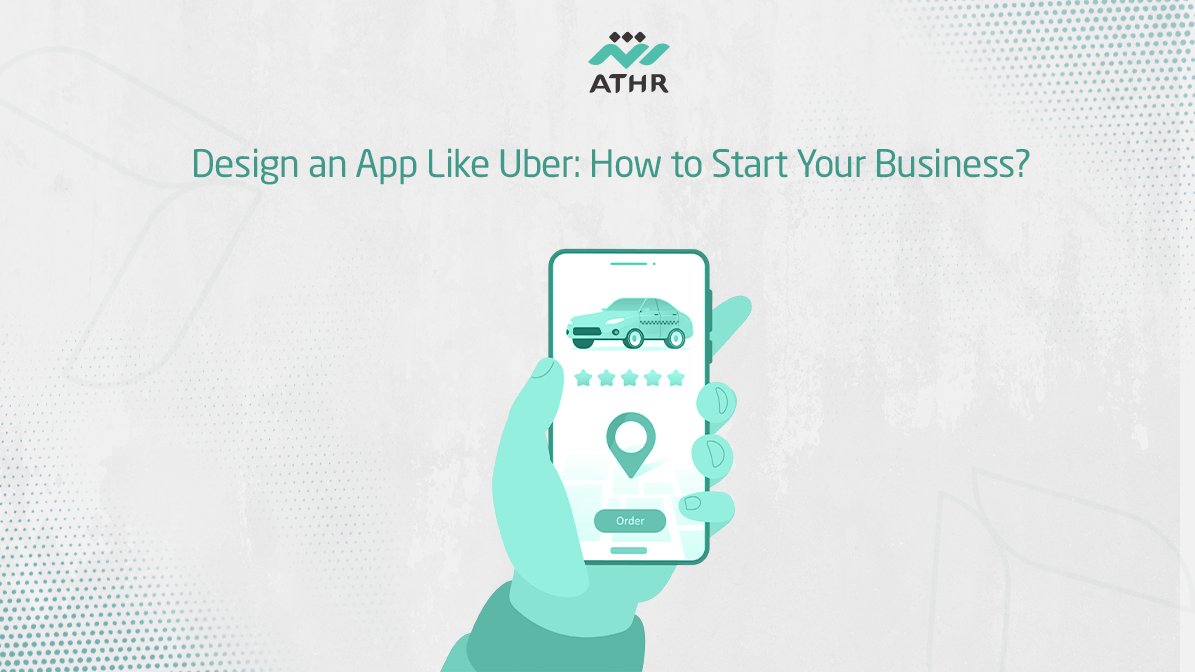
Imagine a customer who needs a ride to work. They open your app, enter their destination, and book a ride within minutes. Designing an App Like Uber starts with creating a user-friendly experience that connects passengers with drivers and provides clear trip details. So, how can you create an app that offers this service?
Share your idea with the Athr team, and let us help you turn it into a mobile app.
Why Is Designing an App Like Uber a Business Opportunity?
Designing an App Like Uber allows you to launch a transportation service without owning vehicles. You can create a platform that connects passengers with independent drivers or transportation companies while helping you manage bookings and trips efficiently.
You can start by offering your service in one city and gradually expand to other cities as demand grows. You can also generate revenue through commissions on rides or driver subscriptions, depending on the business model that best suits your project.
How Does a Ride-Booking App Work?
A ride-booking app connects passengers with available drivers nearby using location-based technologies. Users can request a ride, check the estimated fare, and track their driver’s arrival directly from their smartphones.
The booking process involves five simple steps:
Select a Destination: The passenger chooses their pickup location and destination.
View the Fare: The app displays the estimated trip cost before the booking is confirmed.
Driver Matching: The system searches for an available driver near the passenger’s location.
Track the Ride: Users can track the vehicle and check its estimated arrival time.
Payment and Rating: The passenger pays using an available payment method and rates the driver after completing the trip.
What Makes Smart Transportation Apps Different from Traditional Transportation Services?
Smart transportation apps make booking rides easier for passengers, allowing users to request a vehicle directly from their smartphones without contacting a transportation office. They can also view trip details and track the driver until arrival.
These apps offer several features, including:
Quick Booking: Request a ride at any time, depending on driver availability.
Real-Time Tracking: View the vehicle’s location and estimated arrival time.
Transparent Pricing: Check the estimated fare before starting the trip.
Electronic Payments: Offer multiple payment options to suit different users.
Passengers can also rate drivers after completing their trips, helping you measure customer satisfaction and improve service quality. Through an admin dashboard, you can monitor bookings, drivers, and revenue while managing daily operations efficiently.
For more details, read our article on developing a custom mobile app for your business.
Designing an Uber-Like App: How Can You Turn Your Idea into a Real Business?
App development begins with understanding customer needs and defining the service you want to offer. Before starting the programming process, you need to identify your target audience, the challenges they face when booking rides, and how your app can provide suitable solutions.
These steps help you create a clear plan for your project without spending your budget on features you may not need initially.
Analyzing Competitors and Identifying Opportunities to Stand Out
Studying existing ride-hailing apps in the market can help you understand the services they offer and the features users prefer. You can also review passenger and driver ratings to identify problems that require better solutions.
To conduct a simple competitor analysis, focus on the following aspects:
Available Services: Explore the types of vehicles and rides offered by competing apps.
Pricing: Compare how ride fares are calculated and what additional fees are charged.
Customer Reviews: Examine recurring complaints and feedback to identify weaknesses.
Booking Experience: Test competing apps to evaluate how easy it is to request a ride and complete a trip.
After gathering this information, look for an opportunity your business can address. For example, if you notice frequent complaints about the difficulty of booking family-sized vehicles in a particular area, you can consider offering a service specifically designed for this audience.
Identifying the Problem Your App Will Solve in the Transportation Market
Before you begin developing an app like Uber, think about the problem you want to solve for your customers. Do they struggle to find nearby drivers? Do they need to book rides in advance? Or are they looking for larger vehicles suitable for families?
Based on the problem you choose to address, you can determine which services your app needs and focus on delivering a suitable customer experience instead of adding numerous features that do not support your business goals.
Choosing Your Target Audience and Type of Transportation Service
One of the most important steps in creating an Uber-like app is identifying the customers you want to reach, as the needs of individuals differ from those of businesses and families.
You can choose from the following transportation services:
Individual Transportation: Provide vehicles for daily trips within cities.
Family Transportation: Offer larger vehicles suitable for families and groups.
Employee Transportation: Organize regular transportation services for companies and organizations.
Airport Transfers: Allow customers to book rides to and from airports in advance.
Intercity Transportation: Enable bookings for long-distance trips between cities.
Once you have selected your service type, it becomes easier to identify the right features for your app, such as ride scheduling, vehicle selection, and multiple payment options, based on your target audience’s needs and budget.
Think about the service you want to offer, and leave the app development to us.
What Are the Steps to Create an App Like Uber?
The process begins by identifying the services passengers and drivers need, followed by designing user-friendly interfaces and developing a system to manage bookings and trips.
Once development is complete, the app is tested to ensure it is ready for launch.
Identify the Essential Features Your App Needs at Launch
Start by identifying the features passengers and drivers need to complete trips easily. You can focus on essential features initially and expand the app’s functionality later.
The most important features include:
Account Registration: Create accounts for passengers and drivers and verify their information.
Ride Booking: Allow users to select pickup locations, enter destinations, and request rides.
Maps and Tracking: Display the driver’s location and allow users to track their trips.
Payment Methods: Offer cash and electronic payment options, with the ability to integrate online payment gateways to simplify transactions and provide users with a secure and fast payment experience.
Notifications: Notify users when a ride is accepted or the driver arrives.
You will also need an admin dashboard to monitor bookings, drivers, and payments while managing operations from one place.
Design a Simple Booking Experience from Start to Payment
When designing an app like Uber, ensure users can book a ride in just a few steps. Keep the interfaces clear and avoid unnecessary screens or information that could make the booking process more complicated.
The passenger’s journey begins by selecting a pickup location and destination. The app then displays available vehicles, estimated fares, and expected arrival times. Once the booking is confirmed, the system sends the request to an available driver for acceptance.
After the driver accepts the request, the passenger can view the driver’s and vehicle’s details and track the vehicle’s location on the map until it arrives. Once the trip is complete, the passenger can make a payment and rate the service directly through the app.
The driver, on the other hand, needs an interface that clearly displays trip details and the passenger’s location, along with tools to navigate to the pickup point and easily start and complete the trip.
Test Your App with Real Users Before Publishing
After completing ride-booking app development, test the app with a small group of passengers and drivers before publishing it on app stores. This testing phase will help you identify potential user difficulties and make the necessary improvements.
For example, if some users struggle to identify the meeting point with their driver, you can improve the map interface and add an option to adjust the pickup location before confirming the booking.
Once the issues have been resolved and the app has been retested, you can launch its first version and monitor customer feedback to identify the services and improvements your business may need in the future.
Make the transportation experience easier for your customers and discover the best ways to improve it.
What Makes Ride-Booking App Development Successful?
The success of ride-booking app development depends on ease of use and quick access to transportation services.
Passengers want to book a suitable vehicle without long waiting times, while drivers need to receive ride requests and manage their trips without unnecessary complications.
Easy Ride Booking and Destination Selection
When designing an app like Uber, make sure passengers can easily select their pickup locations and destinations. You can use maps to automatically detect their locations while allowing them to make manual adjustments when needed.
It is also helpful to provide suggestions for nearby places and allow users to save frequently used addresses, such as home and work. Instead of entering the same address every time, users can select it directly and complete their bookings in just a few steps.
Quickly Finding the Right Driver
The speed of finding an available driver directly affects the passenger experience and overall satisfaction with the service. Therefore, developing an app like Uber requires a system that matches ride requests with suitable drivers based on their location, vehicle type, and availability.
The driver-matching process depends on several factors, including:
Geographic Location: Search for drivers near the passenger’s pickup point.
Driver Availability: Send ride requests only to available drivers.
Vehicle Type: Select a vehicle that meets the passenger’s needs.
Estimated Arrival Time: Calculate how long it will take the driver to reach the passenger.
The system should also be able to search for an alternative driver if the first driver rejects the request or fails to respond within the specified time.
Transparent Pricing and Payment Options
One of the key features users look for when booking a ride is the ability to see the estimated fare before confirming their trip. Therefore, make sure prices are clearly displayed, including any additional fees that may affect the final cost.
It is also important to offer payment methods that suit your target audience, such as cash, bank cards, and supported digital wallets, depending on the options available in your target market.
Maintaining App Stability as the Number of Users Grows
A ride-booking app may perform efficiently when operating in a single city. However, as the number of users and trips increases, it requires a technical infrastructure capable of handling more requests without compromising performance.
Therefore, it is important to consider scalability from the beginning, especially if you plan to expand your services across multiple cities in Saudi Arabia or the Gulf region.
Several technical aspects deserve particular attention, including:
Fast Response Times: Receive and process booking requests without noticeable delays.
Location Updates: Regularly update driver locations and trip routes.
Data Management: Organize user information, bookings, and payment records.
Data Security: Protect customer accounts and personal information.
Scalability: Prepare the system to accommodate more trips and users.
Focusing on these aspects from the beginning helps maintain app stability, simplifies future development, and makes it easier to introduce new services as your business grows.
Tell us about your project and get a quote for developing an app like Uber.
How Do You Design an App That Provides an Excellent Experience for Drivers and Passengers?
Successful app design depends on providing a seamless experience for both passengers and drivers, from booking a ride to completing the trip. Passengers want to reach their destinations without complications, while drivers need to receive requests and manage their trips easily.
To achieve this, you need to focus on clear interfaces and transparent pricing, provide convenient communication options, and ensure the app works smoothly across different devices.
Reducing the Steps Between Selecting a Destination and Confirming a Booking
When designing a ride-booking app, keep the booking process simple so users can request a ride in just a few steps. You can combine location selection, destination entry, and vehicle type selection into a single interface instead of requiring users to navigate through multiple screens.
For example, passengers can select their destinations on the map, choose a suitable vehicle, and confirm their requests directly. Once a driver accepts the ride, their details and estimated arrival time are clearly displayed within the app.
This streamlined process makes booking easier, especially for first-time users.
Clearly Displaying Trip Costs Before Confirmation
One of the key advantages of designing an app like Uber is allowing passengers to see their estimated trip costs before confirming a booking. Therefore, make sure prices are displayed clearly to help users choose the vehicle and service that best fit their budgets.
You can organize pricing information within the app by including:
Estimated Fare: Display the expected trip cost before confirming the booking.
Additional Fees: Explain any extra charges that may affect the final cost.
Vehicle Options: Show the prices of different vehicle categories to allow easy comparison.
Payment Methods: Provide cash or electronic payment options, depending on availability.
Making Communication Between Drivers and Passengers Easier
Passengers may need to clarify their waiting locations, while drivers may want to confirm pickup points. Therefore, it is important to provide an easy communication method that allows both parties to coordinate without leaving the app.
You can add in-app messaging or calling features that protect phone numbers, along with automatic notifications sent when a ride is accepted or when the driver approaches the passenger’s location.
Communication options should be clearly visible on the trip screen so both parties can access them quickly when needed.
Designing Interfaces for Different Screen Sizes
When designing an app for passengers and drivers, you must consider different smartphone screen sizes to ensure users can easily read information and tap buttons, whether they are using Android devices or iPhones.
Several elements require attention during the interface design process:
Buttons: Use appropriately sized buttons for booking rides and accepting trip requests.
Maps: Clearly display locations and routes without hiding important trip details.
Text: Choose readable fonts that work well across different screen sizes.
Menus: Organize services and options to make them easy to access.
You also need to test the interfaces on different devices to ensure all elements display correctly and that no issues negatively affect the user experience.
Discover the essential details your app development quote should include.
Designing an app like Uber can be the starting point for your business in the smart transportation market, especially if you offer a service that meets customer needs and makes booking rides easier.
Turn your idea into an investment opportunity with Athr, and contact us to discuss your project and start bringing it to life.