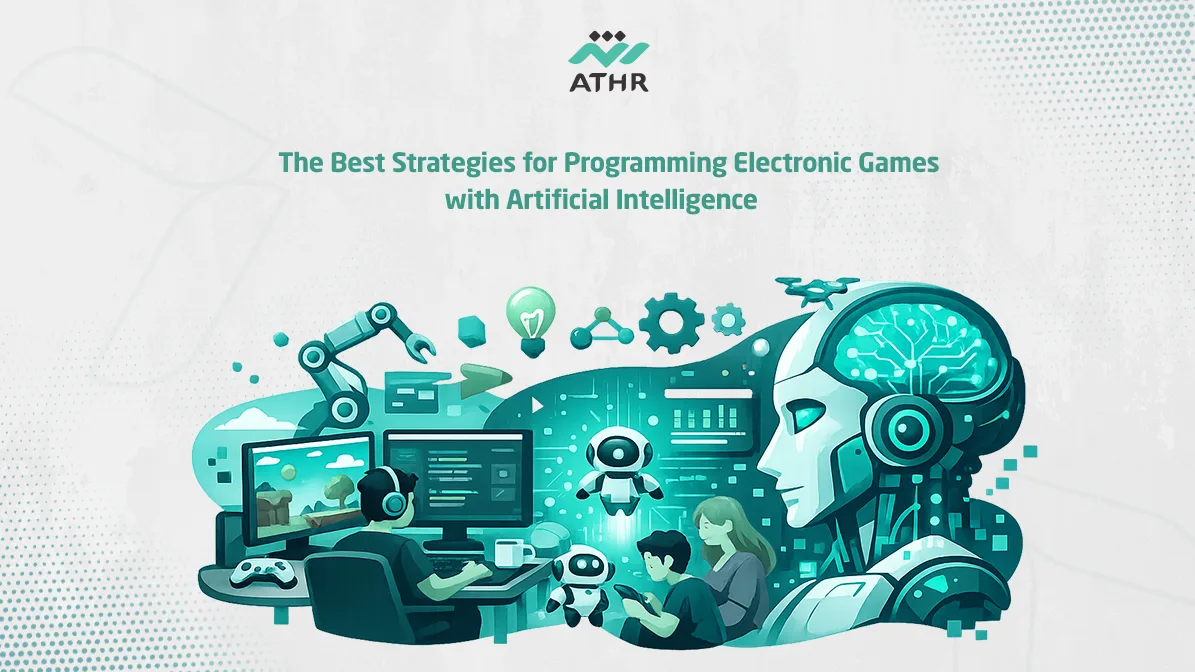
Artificial intelligence has become an essential tool for creating amazing and challenging gaming experiences. With the advancement of technologies, developers can now use AI to enhance characters, enemies, and even customize each level of the game based on player preferences. In this article, we will review the best strategies for programming video games integrated with artificial intelligence to help you build innovative games that captivate players.
📞 Contact us now to help you design video games using artificial intelligence.
How does artificial intelligence change the future of video game development?
The video game industry has undergone a significant transformation in recent years thanks to the development of artificial intelligence. This AI continuously improves the gaming experience, allowing developers to create smart, interactive games that adapt to each player’s style. In the past, games relied on static and limited interactions, but today, thanks to AI, they have become more realistic and immersive.
The Impact of Artificial Intelligence on Character Design in Games
AI has a major impact on character design in video games. Thanks to these technologies, games now feature characters that can be unpredictable, with behaviors that evolve with each step the player takes. AI enhances the characters’ ability to make smart decisions based on the game’s situation, offering an interactive experience that changes with every playthrough.
How Does AI Work in Characters?
Adaptive Behavior: Using technologies like machine learning, characters learn the player’s behavior and adapt to it.
Group Intelligence: Combat characters or teams in the game can develop complex strategies during battles, depending on the player’s moves.
Improving AI in Games to Develop New Gameplay Styles
Improving AI is one of the key elements in developing advanced video games. Instead of relying on traditional programming, developers can use AI to introduce innovative gameplay styles, ensuring users have a fun and unique experience.
How Does AI Enhance Gameplay Styles?
Advanced Analysis: AI can analyze each player’s playstyle and provide customized challenges that match their skill level.
Smart Enemies: AI improves the intelligence of enemies in the game, increasing the challenge and making interactions more exciting.
Best AI Tools and Software for Developing Smart Video Games
AI tools have become an essential component in modern game development, providing innovative solutions to enhance player experience and game quality. From improving graphics to developing intelligent characters, these tools offer endless possibilities to transform games into more interactive and exciting experiences.
Leading AI Tools in the Gaming Industry
1️⃣ Unity ML-Agents:
Unity is one of the most powerful game engines, and with the addition of ML-Agents, developers can now train AI models using machine learning. This tool helps create interactive characters that learn from player behavior, making the game more challenging and realistic.
2️⃣ Unreal Engine AI:
Unreal Engine remains one of the best game engines in the world, and with integrated AI tools, developers can create complex characters and interactive behaviors. Using these tools, developers can enhance character decision-making and interaction with the environment in an intelligent and realistic manner.
3️⃣ Amazon Lumberyard:
Amazon Lumberyard is an open-source game engine from Amazon that includes AI tools such as AI Flow, which helps developers build characters that can interact with the game world in a realistic way. These tools can be used to improve AI for enemies, allowing them to learn from players’ strategies.
4️⃣ Caffe:
Caffe is a powerful framework for developing machine learning models, used in designing interactive games that rely on AI. This framework helps develop characters that can learn and adapt their strategies based on player performance.
How to Choose the Right Tool to Enhance Your Games with AI?
Selecting the right tool is crucial to ensuring the enhancement of your game using AI. Here are some tips to help you choose the best tool:
🔹 Define Your Game Needs: If you’re developing games with interactive characters, Unity ML-Agents or Unreal Engine might be the best choices. For improving graphics and overall interaction, tools like Amazon Lumberyard may be more suitable.
🔹 Integration with Game Engine: Make sure the tool you choose supports the game engine you’re using. For example, if you’re using Unity, ML-Agents would be the best fit.
🔹 Resources and Support: It’s essential to choose a tool with strong support from the community or the company that develops it. Ensure there is a developer community that can assist with any technical issues you might encounter.
🔹 Customization Flexibility: Ensure the tool provides the ability to customize AI according to the type of game you’re working on, whether it’s a combat game or an adventure.
🎮 Turn your game into a unique interactive experience using AI. Contact us today!
Programming Video Games with Artificial Intelligence to Improve Enemies and Increase Challenges
The use of artificial intelligence in enemy design has become one of the most prominent ways to improve the player’s experience. Instead of enemies following static patterns, AI allows the creation of enemies that adapt to the player’s actions, making each gameplay session different and unique.
Strategies for Programming Smart Enemies in Games Using AI
1️⃣ Machine Learning (ML):
Game enemies can learn from player behaviors using machine learning techniques. As the player gains experience, the enemies can become more challenging, keeping the game exciting and preventing the player from feeling bored.
2️⃣ Adaptive Algorithms:
These algorithms enable enemies to interact with the environment more flexibly. For example, an enemy’s behavior may change depending on the time or location within the game, making encounters more realistic and complex.
3️⃣ Swarm Intelligence:
This technique is used to develop enemies that work together tactically. They cooperate to thwart the player’s plans, leading to unexpected encounters where enemies adapt to the player’s strategies.
4️⃣ Social AI:
In some games, enemies can act according to highly complex strategies. For example, enemies may make decisions based on the social environment within the game, such as coordinating group attacks or setting traps.
How Can AI Determine Enemy Behavior Based on Player Actions?
Artificial intelligence can analyze the player’s actions within the game and adjust enemy behavior based on these analyses. Here’s how this system works:
🔹 Gameplay Pattern Analysis:
AI observes the player’s actions, such as speed, direction, and the frequency of weapon or skill usage. Based on these patterns, enemy behavior changes to match the player’s playstyle.
🔹 Dynamic Interaction with Player Actions:
For example, if the player adopts a defensive style, enemies may become more aggressive. On the other hand, if the player’s strategies are offensive, enemy behavior may shift to become more cautious.
🔹 Interaction with the Game Environment:
AI can make enemies interact with their surroundings. For instance, if an enemy notices that the player is approaching a certain area, the enemy might take steps to prepare or set an ambush in that area.
🔹 Response to Unexpected Events:
In games relying on AI, enemies can react to sudden events within the game. If the player suddenly changes strategy or interacts with an unexpected environmental element, AI can adjust the enemy behavior in real-time to adapt to the changes.
Why Should Video Game Developers Use Artificial Intelligence?
Artificial intelligence is no longer just an additional tool in the gaming industry; it has become a core element in the design and development process of games. This technology allows for improvements across various aspects of games, making them smarter and more interactive with players.
Advantages of Artificial Intelligence in Video Game Development
✅ Improved Player Interaction:
AI allows for the creation of unpredictable characters that interact with the player’s behavior and adjust their strategies based on the player’s style. For example, enemies can adapt to the player’s gameplay style, making each gaming experience unique and enjoyable.
✅ Bringing Virtual Worlds to Life:
Using AI, developers can create interactive environments that constantly change in response to the player’s movements, enhancing the interaction with the virtual world and making the experience more realistic and dynamic.
✅ Enhancing Human-Like Intelligence in Games:
AI can analyze the data and patterns followed by players to develop complex behaviors for game characters, which increases the challenge of the game and gives players opportunities to experience new and fun gameplay styles.
✅ Improving Graphics and Effects:
AI is used to enhance the quality of graphics in games, such as improving fine details like lighting, shadows, and textures in 3D games. This contributes to making video games more beautiful and realistic.
How AI Enhances Competitiveness in the Gaming Industry?
The gaming industry is highly competitive, with companies striving to offer the best experience to players. That’s why AI has become a fundamental tool in enhancing competitiveness.
🔹 Creating New Experiences:
AI helps developers create innovative content within video games, such as developing stories that change based on the player’s choices or offering interactive environments that constantly evolve, making games stand out compared to traditional ones.
🔹 Personalized Experiences:
With AI, developers can provide personalized gameplay experiences tailored to the player’s choices and behavior in the game. This customization enhances player loyalty and motivates them to return to the game repeatedly.
🔹 Data Analysis for Game Improvement:
By using AI, player behavior within the game can be analyzed to improve various aspects, such as gameplay style, difficulty levels, and interactions with characters. This analysis helps in adjusting the game to better meet the players’ needs.
🔹 Increasing Productivity and Reducing Costs:
AI can speed up the game development process by automating tasks like game testing and design improvements, reducing costs associated with manual processes and testing.
Would you like to learn more about our services? We are here to answer your questions!
Major Challenges in Using Artificial Intelligence for Game Development
- Integration with Game Engines:
Integrating AI with game engines like Unity and Unreal Engine is one of the biggest challenges in game development. It requires deep compatibility between the AI algorithms and the engine itself to ensure the system works harmoniously. Additionally, this integration may lead to higher system resource consumption, which can affect the game’s performance. - Achieving Realistic Interactions for Enemies and Characters:
One of the biggest challenges is making enemies and intelligent characters behave naturally based on the player’s actions. Simple AI may result in repetitive and unrealistic behaviors, while advanced AI may cause complex or unexpected actions. - Balancing AI with Game Difficulty:
When using AI to challenge players, the difficulty faced by the players must be balanced. If the game is too easy or too difficult, players may lose interest quickly. Achieving the ideal balance requires continuous adjustments and interaction with AI that matches each player’s playstyle. - Keeping Up with Technological Advancements:
Due to the rapid advancement of AI technologies, developers must stay up-to-date with the latest innovations and algorithms. This is a significant challenge, especially in games with complex AI systems that rely on deep learning or neural networks.
How to Overcome Technical Challenges in Developing Smart Games?
Despite the technical challenges developers may face, there are effective ways they can overcome these difficulties and deliver an innovative and seamless gaming experience.
- Using Machine Learning Algorithms:
Machine learning allows AI to learn from the player’s behavior and improve the performance of enemies and characters over time. This helps in developing dynamic models that automatically adapt to the player’s actions, making it easier to address challenges related to developing complex algorithms. - Continuous Testing and Performance Optimization:
To ensure AI doesn’t negatively impact game performance, developers should conduct regular tests across various devices and platforms. Algorithms must also be optimized to match the capabilities of different hardware, ensuring a smooth gaming experience for everyone. - Smart Interaction with the Environment:
By using technologies like predictive AI and swarm intelligence, developers can create dynamic environments that respond to player actions in real-time. These technologies help improve the behavior of enemies and characters, making them interact realistically with the changing game world. - Customization and Balance:
By integrating AI into all aspects of the game, such as enemy strategies and level development, developers can create customized and balanced challenges for each player. AI can adjust the behavior of enemies based on the player’s skill level, maintaining the fun of the game without making it too easy or too difficult.
Integrating AI technologies in video game programming is not just a simple enhancement but a fundamental step toward delivering innovative and interactive gameplay experiences. From improving characters and enemies to personalizing gameplay experiences, AI has become an integral part of modern game development. If you aim to create an innovative and advanced game, adopting these advanced technologies will undoubtedly be key to your success.
📩 Contact ATHR today and get a free consultation for your project!