Many great ideas never see the light of day because they are executed incorrectly. If you want to design a successful mobile app, you need a clear vision and well-thought-out steps from the very beginning.
We will guide you step by step through the app creation process, with practical tips to help you reduce costs and increase your chances of success in the market.
📞Get a free consultation now from Athr Company and take the first step the right way.
From Idea to App: How to Start Correctly?
The first step in any successful project is to ensure that the idea is worth executing. Without clear planning, efforts and budgets can be wasted, or the app may fail after launch. The right start means identifying a real problem people need solving, understanding your target audience, and then building a clear plan for developing the app.
How to Identify a Real Problem the App Solves?
For your app to succeed, it must have a clear purpose: solving a real problem faced by users in their daily lives.
Practical steps to identify the problem:
- Observe the behavior of your target audience and identify their daily needs.
- Study competing apps and identify their weaknesses.
- Ensure that the solution the app offers saves time, effort, or cost.
📊 Market research on apps shows that a large percentage of apps fail because they don’t solve a real problem or offer unclear value to the user.
The Difference Between a Good Idea and a Technically Feasible Idea
Not every attractive idea is immediately feasible.
A good idea may seem innovative, but it may require complex technologies or a large budget.
A feasible idea can be developed gradually, starting with an MVP version and supporting future expansion.
Benefits of Focusing on Feasible Ideas:
- Reduce costs and time spent.
- Avoid costly adjustments later.
- Increase the chances of app success upon launch.
This is where the role of a specialized team in app design and programming, like Athr Company, comes in to help you simplify the idea and choose the best technical solutions from the start.
Your idea + our professional team = a successful mobile app.📱 Contact us today to get started!
Market Research and Competitor Analysis Before Creating the App
Before starting the design of a mobile app from scratch, you need to ensure that the market truly needs your app.
Market research is a key element that determines the success or failure of the app, directly affecting the cost of app creation, the speed of its spread, and its acceptance by users.
Many projects fail because they jump straight into programming without understanding competitors or user behavior, while successful projects always begin with analysis.
How to Analyze Successful Competitor Apps in the Same Field?
Analyzing competitor apps is a crucial step to understanding what works and what doesn’t in the market How to analyze competitor apps?
Start by evaluating apps that provide similar solutions to what you want to implement, focusing on the following points:
- App Features: What features attract users?
- User Reviews: Read comments to understand both the advantages and disadvantages.
- Design: How does the user interface look? Is it comfortable and easy to use?
- App Performance: Does it work smoothly on different devices?
📊 Studies show that 60% of apps fail due to poor user experience, so make sure you understand the key points that differentiate successful apps from those that failed.
Defining the Target Audience and Expected User Experience
After analyzing competitor apps, you should clearly define your target audience. This will allow you to deliver a personalized experience for the user, which is what sets any successful app apart.
🎯 How to Define the Target Audience?
- Age and Gender: Are you targeting young people or seniors?
- Geographical Location: Is the app local or global?
- Interests: Does it target specific fields like sports, education, or e-commerce?
After defining the target audience, you must design the user experience that caters to their needs and expectations. Make sure the app is easy to use and streamlined, and that the interaction experience is smooth.
💡 A poor user experience leads to quick rejection of the app. So, make sure to test the app interfaces early on.
← Check out Athr’s app design projects, which combine innovation and excellent performance to meet market needs.
Designing a Professional Mobile App Interface to Ensure a Successful User Experience
Designing a mobile app interface is not just about choosing colors and buttons, but rather a strategic process that takes user behavior into account. It must be easy to use, responsive, and enjoyable to interact with. By designing a professional mobile app interface, you can ensure that the user experience will be effective, contributing to increased engagement and user retention.
The Difference Between UI and UX and Why Both Are Important?
Many people confuse UI (User Interface) and UX (User Experience), although they each play a different but complementary role.
- UI (User Interface):
It is the visual part the user interacts with: buttons, icons, menus, and colors.
It is the look and design that reflects the identity of the app.
- UX (User Experience):
It is the experience the user has while interacting with the app.
It focuses on user comfort and ease of navigation within the app.
📌 A successful design combines an attractive interface with a simple user experience.
Common Design Mistakes That Lead to App Failure
Many projects waste time and budgets due to design mistakes that could have been easily avoided with better planning and execution, especially when designing a mobile app from scratch.
The Most Common App Design Mistakes:
- Overcrowding the interface with unnecessary elements.
- Lack of clarity regarding the app’s main function.
- Ignoring real user behavior.
- Relying solely on beautiful design without testing the user experience.
- Not considering different screen sizes and devices.
❌ These mistakes lead to:
- Decreased user retention rates.
- Negative reviews on app stores.
- Increased mobile app development costs due to repeated adjustments after launch.
If you have any questions or would like to discuss your idea, 🎧 contact us today!
Choosing the Right Operating System: iOS or Android?
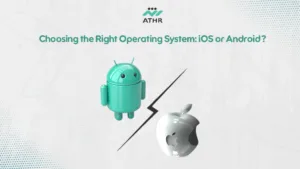
One of the most common questions when designing a successful mobile app is: Which operating system should I choose? iOS or Android?
The decision depends on several factors such as the target audience, technical requirements, and budget. Choosing the right operating system significantly affects the cost of creating a mobile app, its launch speed, and its market reach.
When Should You Choose Only One Operating System?
In some cases, developing the app for only one operating system is the best choice, especially in the early stages of the project.
Choose one operating system if:
- You are targeting a clearly defined user segment.
- Your budget is limited, and you want to launch an MVP version.
- You want to test the idea before expanding.
- The app needs high performance at the beginning.
📌 This strategy reduces risks and gives you the opportunity to develop the app based on real user interactions.
When is Cross-Platform Development (Flutter / React Native) the Best Solution?
If you want to design a successful mobile app from scratch while reducing time and costs, cross-platform development using Flutter or React Native might be the ideal solution.
🧩 Cross-platform development is suitable if:
- You want to launch the app on both iOS and Android at the same time.
- You want to reduce mobile app development costs without compromising quality.
- You plan for rapid market expansion.
- You need simultaneous updates on both platforms.
Advantages of Cross-Platform Development:
- One codebase for both platforms.
- Faster development and launch.
- Easier maintenance and updates.
- A consistent user experience across devices.
💡 However, the success of this option depends on designing a professional mobile app interface that takes into account the different user behaviors between the two systems, not just copying the same design.
Steps to Create a Mobile App from Scratch: Step by Step
The process of creating a mobile app starts with proper planning, followed by design and programming, and ends with testing and launch. At this stage, you should have a clear vision of what you want the app to deliver, and then begin building each part of the app logically.
Functional Planning (Features & User Flow)
Before you start programming, you need to plan the functions that the app will perform, as well as the user flow. This means defining the stages that the user goes through when using the app, from registration to reaching the main feature.
📝 Practical Steps for Functional Planning:
- Define the primary goal of the app in one sentence (What is the number 1 task?).
- Write a list of only “must-have” features before adding the “nice-to-have” ones.
- Draw a simple User Flow: Login → Home page → Perform task → Payment/Confirmation (depending on your project).
- Test the idea with your target audience to get initial feedback.
From our experience at Athr: Most projects that start with a clear User Flow planning experience fewer “change requests” once programming begins, as everything is agreed upon and understood early on.
Preparing the Application Requirements (SRS) Professionally
SRS (Software Requirements Specification) is the document that defines everything related to the app, including functional and technical specifications. Having a professional SRS document ensures a clear vision from the start and helps the development team execute the project with the highest quality standards.
📜 What should an SRS document include:
- App Description: What problem does it solve? What are its main objectives?
- Features & Functions: What functions will the app perform?
- Device Compatibility: What devices will it support?
- Performance & Security: Define the required speed and security.
🕹️ The clearer the SRS document, the faster and less costly the programming process will be.
When to Start Design and When to Move to Programming?
Design is the step that defines how the user will interact with the app, and it should be done early to avoid unnecessary changes later. Once the functional planning and app requirements are defined, it’s time to move to the design phase before starting programming.
🎨 When to Start Design?
- After preparing the SRS, where the app’s functions and technical specifications are defined.
- Start designing the basic wireframes to clarify the user flow.
💻 When to Move to Programming?
- Once all parties approve the design, programming can begin immediately.
With Athr Company, your app can benefit from AI technologies to analyze behaviors and create smart interactions that help improve performance and increase user satisfaction.
Turning an Idea into a Successful Mobile App depends on a series of well-thought-out steps that begin with the idea, followed by planning, design, development, and professional launch.
When the steps for creating a mobile app are implemented correctly, and user experience is considered, risks are reduced, app design costs are controlled, and chances of success in the market increase.
The real difference between an average app and a successful app is working with a team that understands the market, the user, and the technology together.
Let’s move from idea to app! 📲 Contact us now for a free consultation and turn your idea into a tangible product.