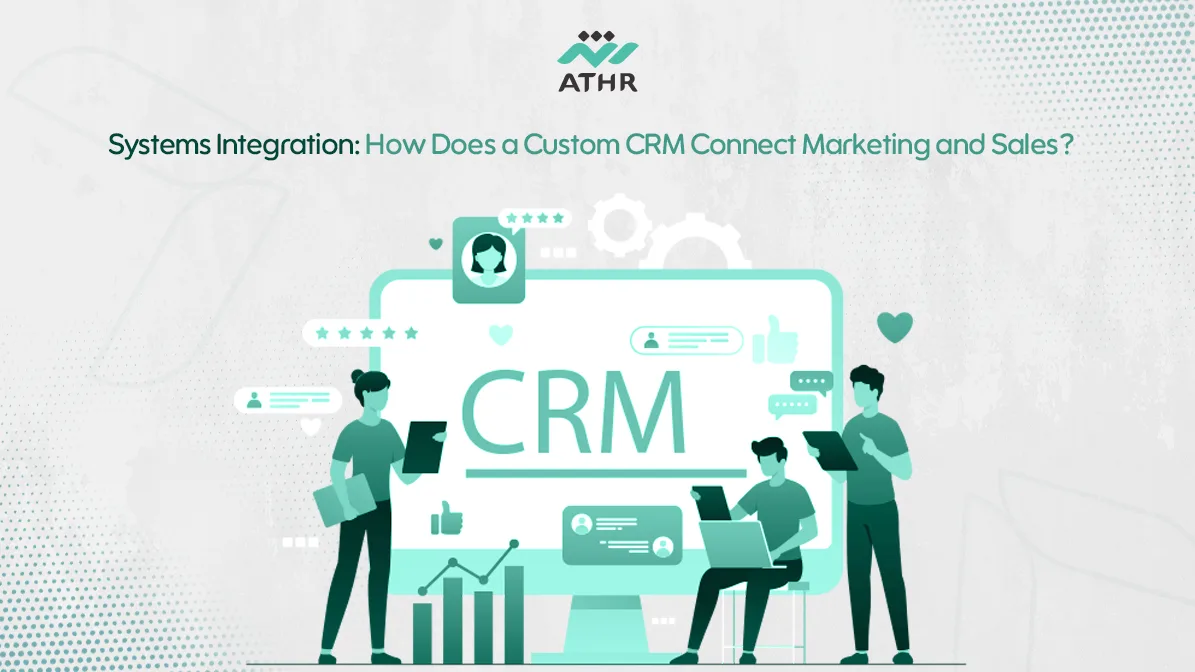
With the rapid shift toward digital transformation, companies now need smart systems that connect marketing, sales, and customer service within a single platform. This is where a custom CRM system plays a crucial role. It simplifies customer data management and enhances collaboration between different teams, helping businesses improve customer experience while increasing sales opportunities and overall growth.
What Is a Custom CRM System, and Why Do Modern Companies Rely on It?
A custom CRM system is a software solution developed specifically to match the unique needs of each company, helping it manage customer relationships in a more organized and integrated way. Its main purpose is to centralize all customer data and related business processes into one platform, making it easier for different teams within the company to access information and handle it efficiently.
Unlike traditional off-the-shelf systems, custom CRM solutions are designed to align with the nature of the business, the structure of its team, and the marketing and sales strategies it follows. This gives companies greater flexibility in managing customers and improving internal operations.
The Difference Between an Off-the-Shelf CRM and a Custom CRM for Businesses
When considering CRM development for businesses, many business owners ask an important question:
Is it better to use a ready-made system, or invest in a custom CRM system developed specifically for the company?
| Comparison | Off-the-Shelf CRM | Custom CRM |
|---|---|---|
| Usage Method | Purchased or subscribed to directly and ready to use | Developed specifically according to the company’s needs |
| Cost | Lower initial cost | Higher initial cost due to development |
| Deployment Speed | Can be launched quickly with minimal setup | Requires time for design and development |
| Flexibility & Customization | Limited to the system’s available options | Fully customizable based on business requirements |
| System Integration | May face limitations when integrating with internal business systems | Allows full integration with the company’s existing systems |
How Does an Integrated CRM System Help Organize Customer Data?
One of the biggest challenges companies face today is the fragmentation of customer data across different departments. Information may be scattered among Excel files, marketing tools, customer service systems, and sales platforms, making it difficult to get a clear view of the customer or track their interactions with the company in an organized way.
However, by using a CRM system for sales and marketing management, all this data can be gathered into one platform, making it easier to access, analyze, and use for better decision-making.
Customer Data Integration Across Departments
The system enables the creation of a unified customer database, allowing every department to access the same information.
For example:
The marketing team can see which campaigns the customer interacted with
The sales team can view the history of communication with the customer
The customer service team can review the issues the customer faced previously
Improved Lead Follow-Up
Integrating a CRM system with marketing and sales helps track the customer journey from the first interaction to the final purchase. The system can show:
The source of the lead
The pages the customer visited
The products they were interested in
Their current stage in the buying journey
This helps sales teams close deals more quickly and effectively.
Reducing Customer Loss
When customer data is well organized within an integrated customer relationship management system, it becomes much easier to follow up with every customer at the right time.
For example, the system can help with:
Reminding the sales team to follow up with leads
Sending personalized marketing messages
Providing fast support when a problem occurs
All of this contributes to improving the customer experience and increasing loyalty to the company.
When Does Your Company Need to Develop Its Own CRM?
Many business owners ask: How do I know if my company needs a custom CRM system?
In reality, there are several clear signs that indicate it may be time to develop a system that helps organize customer data and connect the different departments within your company.
1️⃣ Difficulty Managing Customer Data
If customer data is spread across multiple tools, this is a strong sign that your company needs a CRM system for managing sales and marketing.
2️⃣ Weak Coordination Between Departments
When the marketing, sales, and customer service teams work separately, it becomes difficult to share information across departments or manage the customer journey in a unified way. This often leads to issues such as:
Slow response to customer requests
Repeated communication with the same customer by multiple departments
Loss of potential sales opportunities due to unclear information
3️⃣ Difficulty Analyzing Marketing Campaign Performance
Without proper system integration within the company, it becomes difficult to identify the true results of marketing activities. You may struggle to determine:
Which marketing campaign was the most successful
What the best source of customer acquisition is
Which stage of the sales process delivers the best results
This is where a CRM system becomes essential by providing accurate customer data insights that help management make more effective marketing decisions.
4️⃣ Growth in Customer Numbers
As your customer base grows, it becomes increasingly important to use the best CRM system for businesses to manage relationships professionally and efficiently.
🔎 Discover now how to design a profitable mobile app step by step with ATHR’s experts.
How Does a Custom CRM System Enable System Integration Within Companies?
Modern businesses rely on multiple digital systems such as marketing tools, sales management platforms, and customer support software. However, challenges arise when these systems operate independently without a unified platform that connects them.
A custom CRM system helps integrate these systems within companies, delivering several key benefits, including:
Improving the flow of information between different departments
Reducing errors caused by manual data entry
Accelerating decision-making processes within the organization
Delivering a more professional and seamless customer experience
Connecting Databases Across Different Departments
One of the most important functions of a CRM system for sales and marketing management is its ability to connect various databases within the company.
In many organizations:
The marketing department uses campaign analytics tools such as Google Analytics
The sales team uses a deal or pipeline management system
The customer service team relies on helpdesk or support software
Without integration, each department operates with its own set of data, making collaboration difficult.
How Are Databases Connected Within a CRM System?
A CRM system creates a unified database where all customer information is stored, including:
Contact details
Purchase history
Customer interactions with marketing campaigns
Customer support requests and service records
This centralized approach makes customer management through CRM more accurate and efficient.
Unifying Customer Information in a Single Platform
One of the most common problems within organizations is the fragmentation of customer data across departments. The marketing team may hold different information than the sales or customer service teams, making it difficult to track the customer journey accurately.
With a custom CRM system, all customer data is stored in a single centralized database, allowing every department to access the same information easily.
What Does a Customer Profile in CRM Include?
A typical customer profile within a Customer Relationship Management system includes essential information such as:
Customer contact details
Previous purchase history
Marketing campaigns the customer interacted with
Previous support requests or issues
Notes from the sales team about the customer
How Does Data Unification Improve Customer Experience?
When customer information is organized in one place, companies can:
Provide personalized marketing offers to each customer
Respond to support requests more quickly
Improve the accuracy of marketing campaigns
Increase the chances of closing sales
This clearly highlights the role of a CRM system in improving customer experience and strengthening relationships with clients.
What Are the Key Steps to Developing a Custom CRM System for Businesses?
Developing a custom CRM system for businesses is not just a technical project; it is a strategic step that helps organize customer management and connect company departments more efficiently. When a CRM system for managing sales and marketing is designed correctly, it becomes easier to enhance collaboration between teams and make better use of customer data.
Analyzing Business Needs and Internal Processes
The first step in developing a custom CRM system is gaining a deep understanding of the company’s needs and how its operations work. Every company has its own way of managing customers and handling data, so the system must be designed to match the organization’s workflow.
At this stage, several important aspects are analyzed, such as:
How customers are currently managed within the company
How marketing and sales teams operate
The communication channels used with customers
The existing systems and software currently in use
The importance of this phase lies in ensuring that the CRM system truly meets the company’s operational needs. When internal processes are clearly understood, a Customer Relationship Management (CRM) system becomes a powerful tool for improving information flow between teams, reducing operational errors, and increasing overall efficiency.
Designing the System and Integrating It with Other Platforms
At this stage, the core structure of the CRM system is built to connect different systems used within the company and consolidate data into a single platform. This makes it easier to manage customers and monitor operations in a more organized way.
How Is CRM Integrated with Other Systems?
A CRM system for sales and marketing management can be integrated with several key platforms within the company, including:
Digital marketing platforms
Sales management systems
Company websites and mobile applications
Customer service and technical support systems
This integration ensures smooth data flow and provides a comprehensive view of customer interactions.
Testing the System and Training Employees
Testing the CRM system before launching it within the company is a crucial step to ensure that it operates efficiently and achieves its intended goals without any issues.
What Does System Testing Include?
The testing phase typically includes several essential checks, such as:
Ensuring the speed and performance of the system
Testing integration with other company systems
Verifying data accuracy and consistency
Evaluating the user interface to ensure ease of use
This step helps guarantee that customer management through CRM will be efficient and reliable.
Training Employees to Use the System
Even the best systems will not deliver real results if employees do not know how to use them properly. Therefore, it is essential to train teams on how to:
Manage customer data within the system
Track and follow up with potential customers
Read and analyze reports
Use the system to improve customer service
Proper training ensures that the company gains the maximum benefit from the CRM system while improving the overall customer experience.
If you are looking to achieve digital excellence, this article will give you the right starting point.👈
Benefits of a Custom CRM System for Businesses in Customer Management
Many companies today rely on custom CRM solutions because they help manage customer relationships in a more organized and effective way. Instead of using separate tools for each department, a CRM system for managing sales and marketing allows all customer data to be collected in one platform that teams can easily access and share.
Managing Customers More Efficiently with CRM
Many organizations turn to a custom CRM system to better organize and manage customer data. The system stores all customer information in a centralized database that can be easily accessed and monitored by different teams within the company.
How Does CRM Help in Customer Management?
A Customer Relationship Management (CRM) system provides a range of tools that simplify managing relationships with customers, including:
Organizing customer data in a structured way
Tracking all interactions and communications with customers
Viewing purchase history and previous transactions
Analyzing customer behavior and interests
Improving Lead Follow-Up
In many cases, valuable sales opportunities are lost due to poor follow-up or lack of coordination between marketing and sales teams.
With a CRM system for sales and marketing management, it becomes much easier to track and manage every potential customer in an organized way.
How Does CRM Help with Lead Management?
A custom CRM system for businesses helps by:
Automatically capturing leads from marketing campaigns
Assigning leads to sales representatives in an organized way
Sending reminders for timely follow-ups
Analyzing the chances of converting leads into actual customers
Customer Journey Stages Within a CRM System
The customer journey inside a Customer Relationship Management system typically passes through several stages:
Collecting customer data from marketing campaigns
Analyzing the customer’s interests and needs
Contacting the customer through the sales team
Converting the lead into an actual customer after the purchase
Providing support services and post-sale follow-up
Through this structured process, CRM systems help companies manage customers more professionally and increase the success rate of sales operations.
Reducing Lost Sales Opportunities
One of the most common challenges companies face is losing sales opportunities due to poorly organized customer data. A potential customer may contact the company, but without a centralized system to record and track their information, the opportunity may be missed.
This is where a custom CRM system becomes essential. It helps companies record all potential customers and follow up with them in a structured manner. The system enables businesses to log each lead within the platform, send reminders to the sales team for timely follow-ups, track deal stages, and analyze the reasons behind lost customers.
📩 Contact ATHR today and get a free consultation for your project.
In conclusion, a custom CRM system helps companies organize customer data and connect marketing, sales, and customer service departments within a single platform. This integration improves customer experience and significantly increases the chances of business success.